
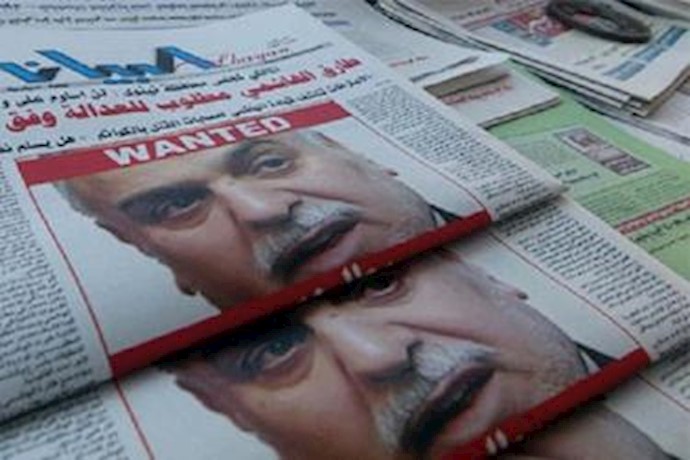
Al Arabiya, 31 Jan 2012 – Iraqi security forces have detained 16 of Tareq al-Hashemi’s bodyguards, the interior ministry said, in a move the fugitive vice president said Tuesday was the latest in a string of false accusations.
Hashemi is hiding in the autonomous Kurdish region of northern Iraq after the Baghdad authorities issued a warrant for his arrest in mid-December on charges of running a death squad.
The Kurdistan authorities have so far declined to hand him over to the central government for trial.
“Interior ministry security forces detained 16 members of Vice President of the Republic Tareq al-Hashemi’s guard, who were practicing assassinations with silenced rifles and pistols targeting interior ministry officers and judges,” the ministry said in a statement posted on its website on Monday.
The statement said the guards confessed after being detained, and that the arrests followed confessions by some of their colleagues.
Hashemi’s office denounced the detentions and said it “does not represent anything new in the series of fabricated accusations, and will not attract the attention of the Iraqi people.”
A statement said the guards had previously been told they were not wanted and allowed to go on leave, but were later arrested.
“Is it reasonable that people involved in terrorist activities prefer to return to a site that is sealed off by (security forces) to be arrested, or is it logical for them to take the first chance for them to run away?” Hashemi asked, noting that they had such a chance when they went on leave.
Meanwhile, human rights group Amnesty International said two women employed by Hashemi’s office — Rasha Nameer Jaafer al-Hussein and Bassima Saleem Kiryakos — were detained on January 1 and that their whereabouts were not known.
“Amnesty International fears both women may be at risk of torture or other ill-treatment,” Amnesty said, adding that their arrests appeared to be related to their association to Hashemi.
A wider row
The December accusations against the vice president came amid a wider row between the secular Sunni-backed Iraqiya bloc, of which he is a member, and the Shiite-led government.
Iraqiya began a boycott of parliament and the cabinet in December to protest against what it charged was Prime Minister Nouri al-Maliki’s centralization of power, and it has since called for Maliki to respect a power-sharing deal or quit.
Maliki, a Shi’ite, has also said his Sunni deputy Saleh al-Mutlak should be sacked after the latter said the premier was “worse than Saddam Hussein.”
Iraqiya announced on Sunday that its MPs would return to parliament, somewhat easing the crisis, though it has not yet decided to return its ministers to the cabinet. Its MPs returned to parliament on Tuesday.
“The majority of the members of Iraqiya participated in the session today,” said Iraqiya MP Faiza al-Obeidi.
“We conducted the second reading of the 2012 budget and negotiated on an amnesty law” for Iraqis who have been involved in violence.
The “return is very significant for us due to the importance of these two laws and of the national conference,” Obeidi said, referring to a conference proposed by President Jalal Talabani, a Kurd, aimed at resolving Iraq’s political crisis.
Iraqiya won the most seats in March 2010 parliamentary elections but was outmaneuvered by Maliki in forming a government.
The crisis has underscored the deep fractures in Iraq’s government that divides ministries up among Shi’ite, Sunni and Kurdish blocs in a unwieldy power-sharing arrangement that has stalled key legislation, including a vital oil and gas law, since its formation a year ago.
Iraq’s Shi’ite majority has ascended since the 2003 invasion that ousted Sunni dictator Saddam Hussein, and Maliki has since edged the country close to Shi’ite power Iran, worrying Baghdad’s Sunni Arab Gulf neighbours.
A former Arabic teacher who emerged as a shrewd political player, Maliki says his moves against Sunni leaders are legal. But the measures are compounding fears among Iraqi Sunnis that he is seeking to consolidate his power at their expense.
Since the crisis erupted in mid-December, violence has spiked with more than 450 people killed in attacks. The number of victims in January alone was more than double a year ago, according to government figures and a Reuters tally.
Security officials blame Sunni Islamist insurgents trying to incite sectarian tensions for recent attacks on Shi’ite targets, including a suicide bomb attack on a Shi’ite funeral in a Baghdad neighborhood on Friday that killed 32 people.