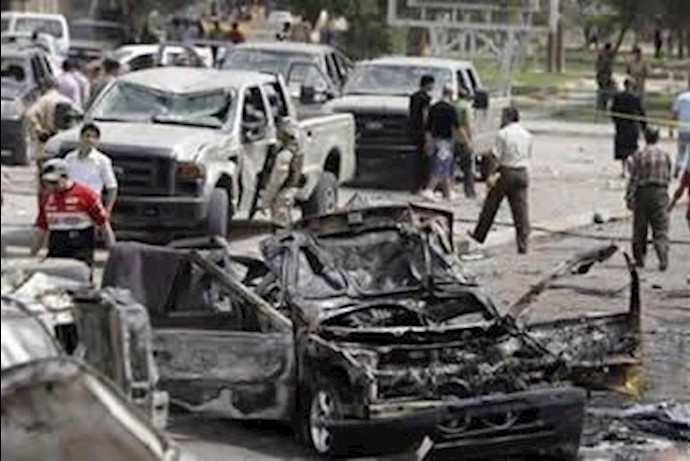
Financial Times, April 5, 2010 – In spite of marked security gains, violence is never far away in Iraq. Yet over the weekend an attack occurred that was as shocking as any for some time – an assault that recalled the killings in 2006 and 2007, which almost sank the country into all-out civil war.
Men wearing military uniforms descended on an Arab Sunni village south of Baghdad and moved from house to house, handcuffing residents before shooting. The victims included five women and 19 men.
It is unclear who was responsible, but such a chilling attack at a time when post-election political wrangling has raised tensions in the fragile nation will no doubt add to people’s fear about what their future holds.
Then, on Sunday, three car bombs killed at least 41 people in Baghdad.
The March 7 election was described as the most decisive moment in Iraq’s history since the US-led invasion seven years ago, partly because it will determine who governs as Washington completes its military withdrawal by the end of 2011.
But it was also a critical test of how far the fledgling democratic process has matured. Would the vote bring more stability or stoke divisions and be a catalyst for further bloodletting? Would the sectarianism that tarnished the 2005 elections be diluted by a move towards a more secular, inclusive political environment?
Before the vote, Iraqis of all communities told me of their desire never to return to the Shia-Sunni violence that ripped their nation apart.
It was not the ordinary Iraqi who fuelled the bloodshed, they said; rather, it was the politicians who were to blame.
But the reality is that sectarian and ethnic factors once again determined voting patterns.
“It does not matter how secular you are, you need somebody to watch your back,” one Iraqi explained.
True, Iyad Allawi’s secular Iraqiya list did eke out a narrow win at the polls, pipping Nouri al-Maliki’s State of Law alliance by two seats, according to preliminary results.
But it would be wrong to view that as a sign sectarianism had been marginalised.
Mr Allawi is a secular Shia, but his alliance is dominated by Sunnis – who have complained of marginalisation since Saddam Hussein’s fall – and it was their support that ensured Mr Allawi’s success.
In contrast, Mr Maliki, the Shia Islamist prime minister, garnered negligible votes in Sunni areas, in spite of rebranding himself as a nationalist, non-sectarian leader.
He relied on the Shia majority, whose vote was carved up among competing Shia lists, dominated by Islamists. As for the Kurds – they voted for Kurds.
With no one close to a majority in the 325-member parliament, horse-trading has intensified to form alliances that would enable a bloc to lead the next government.
With numerous options possible, the Sadrist movement of Moqtada al-Sadr, the radical cleric, and the Islamic Supreme Council in Iraq, both prominent Shia parties, could play the role of kingmakers.
There is also talk of Iran’s influence and its potential to try to push the Shia parties to forge an alliance that would sideline Mr Allawi. He, meanwhile, is warning that such a move would create a “serious backlash”.
The clear message from Sunnis before the vote was that they expected change – meaning an end to the political domination of Shia Islamists.
They would probably react to any such government with anger. It would also sorely test their faith in the political process. In an environment still blighted by violence, and where conspiracy theories run wild, that would be a dangerous outcome.
Some say Iraqis are apt to go to the brink and pull back with a last-minute deal. Diplomats also say politicians have grasped the importance of having a government that is considered inclusive if the violence of the past is not to be repeated.
The latest attacks demonstrated the threat of extremists bent on derailing Iraq’s tentative gains. Now it is up to the politicians to demonstrate they can rise above a hunger for power and work in the nation’s interest to ensure no group feels excluded – no matter who leads the next government.