Tuesday, March 03, 2009
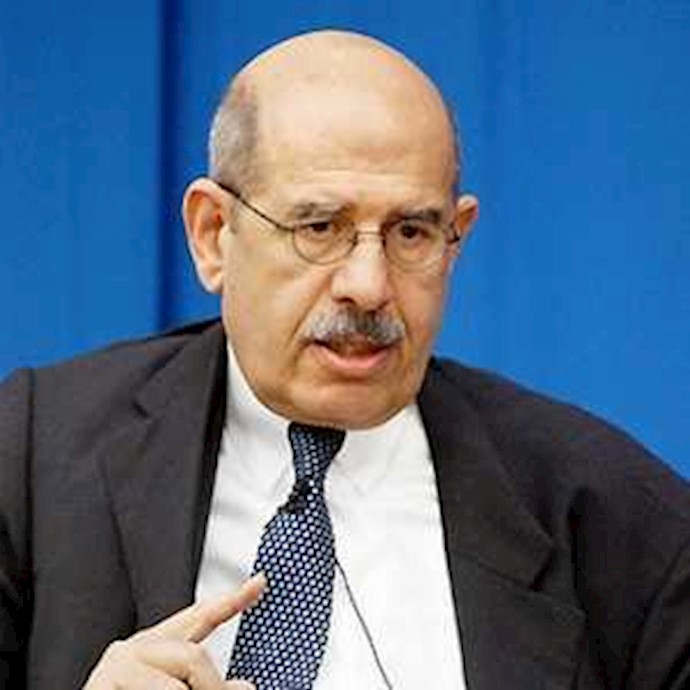
AFP, Vienna, March 2, 2009 – UN atomic watchdog chief Mohamed ElBaradei urged Iran Monday to ’unblock’ a long-running nuclear standoff and expressed hope that a possible change in US policy towards Tehran may help break the deadlock.
’I again urge Iran to implement all measures required to build confidence in the exclusively peaceful nature of its nuclear programme at the earliest possible date and to unblock this stalemated situation,’ ElBaradei said in his opening speech to the International Atomic Energy Agency’s 35-member board of governors here.
And he added: ’I am hopeful that the apparent fresh approach by the international community to dialogue with Iran will give new impetus to the efforts to resolve this long-standing issue.’
The Egyptian-born diplomat did not specifically mention the United States, but he was clearly referring to the new president Barack Obama’s signal that he is ready to talk with Iran directly.
The IAEA board meeting, slated to last all week, was the first since the change of power in Washington.
Even after a six-year investigation, the IAEA has been unable to say once and for all that Iran’s controversial nuclear programme is entirely peaceful, as Tehran claims.
In a report released last week, ElBaradei had complained that Iran was stonewalling on key questions regarding the possible military dimension of past nuclear work and also defying UN orders to suspend uranium enrichment, a process that can be used not only to make nuclear fuel, but also the fissile material for a bomb.
He made the same complaints again on Monday.
’The agency regrettably was unable to make any progress on the remaining issues which give rise to concern about possible military dimensions of Iran’s nuclear programme because of a lack of cooperation by Iran,’ he said.
Iran’s first satellite launch in February and the announcement that its first nuclear power plant in Bushehr could go on line within months have heightened proliferation concerns in many Western countries.
A prediction that Tehran may soon be in a position to build a nuclear bomb has also raised fears.
A top US military officer, Admiral Mike Mullen, told CNN Sunday that Iran has enough fissile material for a bomb, the first time that Washington has made such an assessment.
But US Defense Secretary Robert Gates was more cautious.
’They’re not close to a weapon at this point,’ he said.
Iranian foreign ministry spokesman Hassan Ghashghavi denied that Tehran was seeking to make a nuclear bomb.
’All this talk is baseless,’ he said.
Turning to the IAEA’s investigation into allegations of illicit nuclear work by Syria, ElBaradei pressed Damascus to come clean on a suspect site in the remote desert, which the US alleges had been an undeclared nuclear reactor until it was bombed by Israeli planes in September 2007.
’The agency expects Syria to provide additional information and supporting documentation about the past use and nature of the building at the Dair Alzour site,’ ElBaradei said.
The IAEA has already said that the building bore some of the characteristics of a nuclear facility. And UN inspectors have detected ’significant’ traces of man-made uranium at the site, as yet unexplained by Damascus.
Syria has claimed the uranium came from the Israeli bombs, but the watchdog has more or less ruled out that interpretation.
’Our current assessment is that there is a low probability that the uranium was introduced by the use of missiles,’ ElBaradei said Monday.
The IAEA chief also urged Syria to provide access to additional related sites.
’Such access, together with the sampling of the destroyed and salvaged equipment and debris, is essential for the agency to complete its assessment,’ he said.
The IAEA board will later this week discuss who will replace ElBaradei, who is stepping down in November after 12 years in the post.
There are currently only two candidates, Japanese ambassador Yukiya Amano and South Africa’s Abdul Samad Minty.