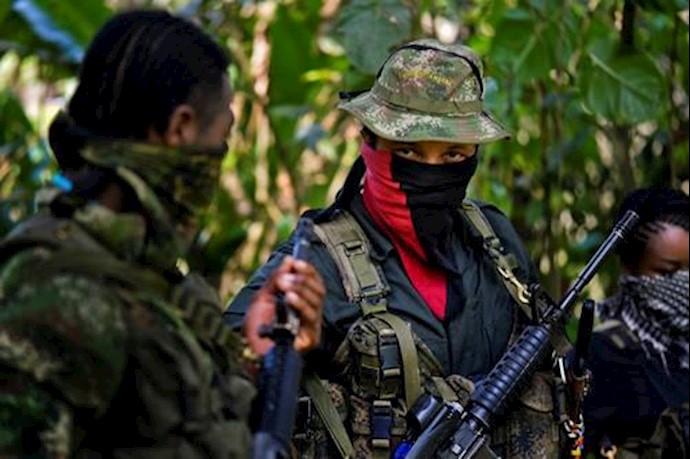
AFP, 8 Febuary 2017 – Peace negotiators from the Colombian government and the ELN, the country’s last active rebel group, got down to business behind closed doors in their first day of talks Wednesday, seeking to end a half-century conflict.
President Juan Manuel Santos’s government is trying to reach a deal to bring “complete peace” to Colombia, after sealing a historic accord with the country’s largest rebel group, the FARC, in November.
“We’re going to negotiate seriously and quickly,” the government’s chief negotiator, Juan Camilo Restrepo, wrote on Twitter before the talks began.
“We hope the ELN understands that these are times of peace. And that it will have the foresight not to jump off the peace train,” he said.
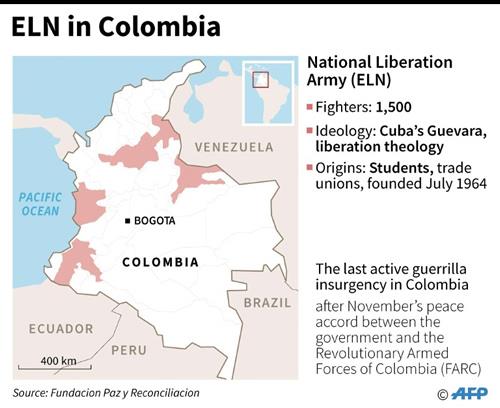
ELN in Colombia
Neither side spoke to journalists as they arrived under police escort Wednesday morning at the Jesuit retreat where the first round of talks is being held outside the Ecuadoran capital Quito.
In an opening ceremony Tuesday, Restrepo said the initial talks would focus on two themes: humanitarian issues and trust-building measures.
He insisted the ELN renounce ransom kidnappings, one of its main funding sources. Failure to do so would make it “very difficult to advance,” he warned.
The ELN’s chief negotiator, Pablo Beltran, for his part called on the government to “take responsibility” for its actions during the conflict — saying the rebels were ready to do the same.
The Cold War-era conflict, which has killed more than 260,000 people and left 60,000 missing, is the last major armed conflict in the Americas.
Colombia, South America’s third economy and the world’s biggest cocaine producer, has been torn since the 1960s by fighting that has drawn in multiple leftist rebel groups, right-wing paramilitaries, drug gangs and the army.
November’s landmark peace accord with the FARC, or Revolutionary Armed Forces of Colombia, leaves the ELN, or National Liberation Army, as the last active guerrilla insurgency.
It has an estimated 1,500 fighters.
– World watching –
Colombia has drawn world attention as a rare good news story as it has closed in on peace, first with the FARC and now the ELN.
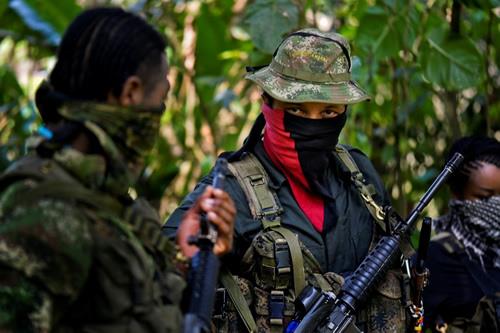
The National Liberation Army rebel group has an estimated 1,500 fighters, mostly in the north and west of Colombia
UN Secretary General Antonio Guterres, the European Union and the Organization of American States all sent messages of encouragement.
Guterres welcomed the talks and urged “serious and productive discussions that lead promptly to a reduction of all forms of violence,” his spokesman said in a statement.
The EU called on both sides to “intensify their efforts… to reach a full accord.”
OAS Secretary General Luis Almagro meanwhile called the ELN talks a “new impetus of hope.”
The talks come after three years of secret negotiations and an embarrassing false start in October, when the ELN refused to release its most high-profile hostage, the ex-lawmaker Odin Sanchez.
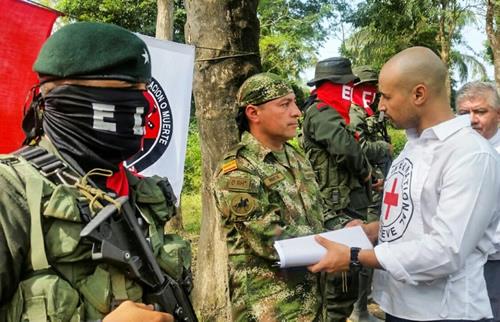
Colombian soldier Fredy Moreno (C), who was kidnaped by National Liberation Army (ELN), shakes hands with a member of the Red Cross before his release in Arauca on February 6, 2017
A flurry of behind-the-scenes negotiations followed, leading to Sanchez’s release on Thursday in exchange for two ELN prisoners.
In a further goodwill gesture on Monday, the ELN released a soldier captured two weeks earlier.
But experts warn the ELN will be a tougher negotiating partner than the FARC.
And elections in 2018 to decide Santos’s successor threaten to complicate matters.
Santos has staked his presidency on the peace process, and won the Nobel Peace Prize in October for his efforts.
But he faces ongoing resistance from conservative opponents who accuse him of granting impunity to rebels guilty of war crimes.
The debate looms large over next year’s elections.
Negotiators are unlikely to reach a final deal before Santos leaves office, said Frederic Masse, a political scientist at the Universidad Externado in Bogota.
“The objective, then, will be to advance far enough that there’s no turning back for the next government,” he said.