An agreement to curb Iran’s nuclear program could create a bonanza for U.S. defense contractors who already are benefiting as the Obama administration tries to assuage Israeli and Gulf Arab concerns by cutting deals for more than $6 billion in military hardware.
The details of a potential deal being negotiated between Iran and six world powers — China, France, Germany, Russia, the U.K. and U.S. — would determine what steps the U.S. takes to help its allies. A nuclear agreement is likely to prompt Mideast partners to seek improved defense systems from American contractors such as Boeing Co., Lockheed Martin Corp. and Raytheon Co. as well as weapons-makers in France and elsewhere.
“In theory, an Iran deal could lead to a reduction in tensions in the region that would reduce the demand for advanced weaponry,” said William Hartung, director of the Arms and Security Project at the Center for International Policy in Washington. “In the short-term, a deal could actually boost the demand for arms.”
Gulf states and Israel have said they wouldn’t trust any pact forged in Vienna to curb Iran’s pursuit of nuclear weapons. They also worry that if economic sanctions are lifted and Russia’s push to lift an arms embargo on Iran succeeds, that would let the Islamic Republic upgrade its aged military hardware. Those concerns could lead them “to seek more imported weaponry regardless of whether there is an Iran deal,” Hartung said.
Missile Defense
President Barack Obama promised Gulf leaders accelerated arms deliveries at a May summit he held to address their fears about an Iran deal. A final communique proposed development of a regional integrated missile-defense system.
“We really need to put the accelerator on that,” said Derek Chollet, a former assistant secretary of defense who’s now a senior adviser at the German Marshall Fund in Washington. “We will want to reassure our Gulf partners” that “their security needs will be met,” Chollet said.
Congress already has approved billions of dollars in pending arms contracts to the Gulf. The United Arab Emirates has one valued at $130 million for 1,100 laser-guided bombs, parts and logistics from Boeing and Raytheon. Another potential contract for as much as $900 million is pending for the sale of 12 High-Mobility Artillery Rocket System launchers and 100 rockets made by Lockheed.
Saudi Contracts
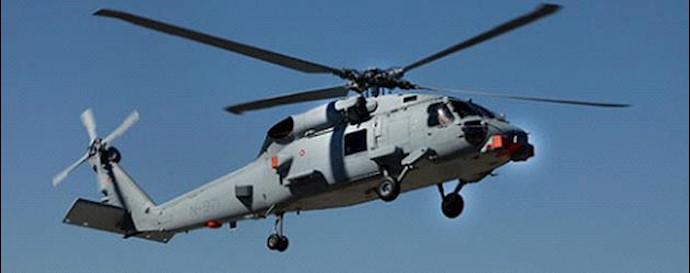
The Saudi government may pursue a contract for as much as $1.9 billion in potential sales of 10 United Technologies Corp. Sikorsky MH-60R helicopters, radar and spare parts; another potential contract valued at as much as $1.75 billion is pending for as many as 202 Lockheed PAC-3 missiles and associated equipment.
While Gulf nations would like a “commitment that the United States would come running, what they can get is deeper cooperation, more integration and technology transfers,” said Hussein Ibish, a scholar at the Arab Gulf States Institute in Washington.
Melissa Dalton, a fellow at the Center for Strategic and International Studies, said the U.S. could speed up spending or offer new arms deals, invest more effort in improving Gulf cybersecurity for oil and other infrastructure and increase regional military exercises.
Facing defense budget pressure at home and competition from European companies attempting to capitalize on doubts about America’s reliability, U.S. contractors have reason to seize the opportunity.
Saudi Arabia is already getting reassurances from Washington, said Bruce Riedel, a senior fellow at the Brookings Institution. The U.S. is providing the kingdom with intelligence and logistics support in its war against the Houthis in Yemen
“In my view, we’re doing that much more to keep them on board on the P5+1 issue than it is anything about Yemen,” Riedel said, referring to shorthand for the six powers negotiating with Iran. “I don’t think the United States has a real dog in the fight between the Houthis and the House of Saud.”
Assuaging the Saudis
U.S. efforts to assuage Saudi Arabia also can be seen in the recent move to remove limits on security assistance to neighboring Bahrain
According to a State Department statement, “Bahrain has made some meaningful progress.”
Bloomberg, 9 July 2015