

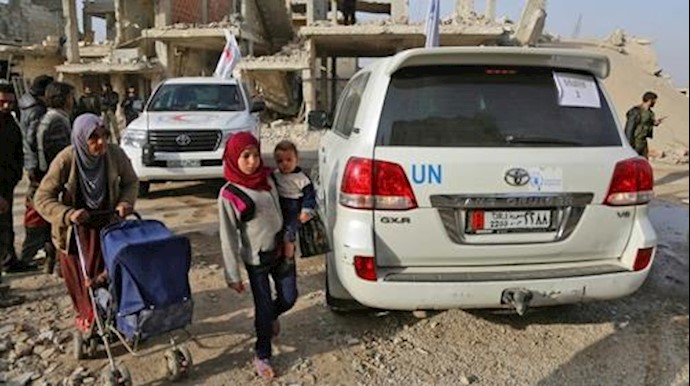
AFP, Nov. 29, 2017 – Syria’s government met the UN on Wednesday for talks on ending the civil war after threatening to skip the negotiations over the opposition’s call for President Bashar al-Assad’s ouster.
The government had initially refused to confirm it would attend the United Nations-brokered peace talks, which began on Tuesday, after the rebels signalled they would maintain a hardline on the president’s removal from office.
But a government delegation met Wednesday with UN mediator Staffan de Mistura — first at a luxury Geneva hotel and later at the UN — after reportedly securing key concessions, including keeping the Assad issue off the table.
With the help of Russian military support, the Syrian regime has made major advances against its opponents in the past two years, taking back large chunks of the country and easing the pressure to negotiate.
The talks have achieved little through seven previous rounds but there are hopes the latest bid may make progress.
De Mistura said the atmosphere in his meeting with the government was “constructive and professional”. He said the talks may stretch into next week.
Government delegation chief Bashar al-Jaafari declined to speak to reporters.
– Opposition wants direct talks –
The opposition, united in one delegation for the first time, has stressed it is anxious for face-to-face talks with the government.
“As the other party (Damascus) has arrived, we want to move rapidly, as quickly as possible to a direct negotiation,” rebel delegation chief Nasr al-Hariri told reporters at the UN before entering an evening meeting with de Mistura.
The envoy has said he would push for direct talks once the opposition unified, but a source close to the government told AFP Damascus would not agree to sit around a table with rebel negotiators at this stage.
Hariri has said his camp was still insisting on Assad’s removal as part of any peace deal, defying calls for moderation and reportedly infuriating the government.
De Mistura had voiced hope the coming round would mark the first “real negotiation” on a possible deal to end the six-year war which has claimed more than 340,000 lives, forced millions to flee their homes and left Syria in ruins.
He has also warned the opposition that intransigence on the Assad issue might no longer be tenable.
In September, he said the opposition needed to be “realistic” and accept that “they didn’t win the war” — a statement supported by facts on the ground.
– ‘Pragmatic and flexible’ –
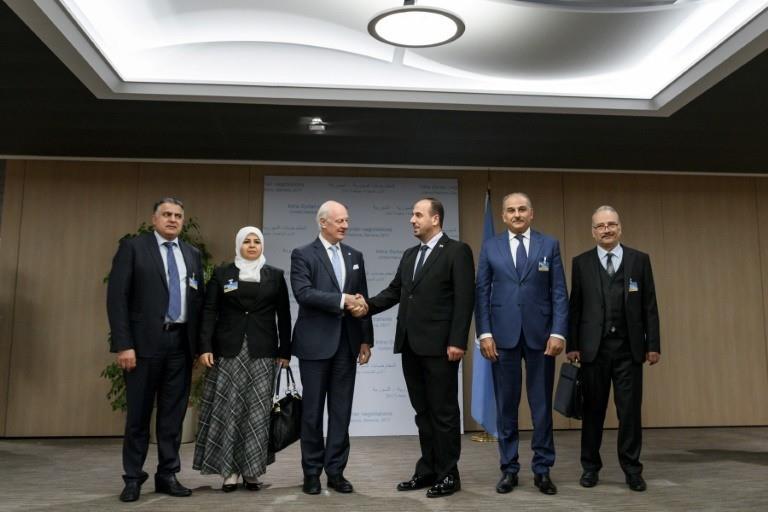
UN Special Envoy for Syria Staffan de Mistura met with rebel negotiators in Geneva
With the help of Moscow, Assad’s government has regained control of 55 percent of the country. The rest is carved up between rebel factions, jihadists and Kurdish forces.
The decision last week by Syrian opposition groups to send a single delegation to Geneva raised hopes of a possible breakthrough.
The new rebel negotiating team includes members of the Saudi-backed High Negotiations Committee (HNC), which insists on Assad’s departure, as well as representatives of groups based in Moscow and Cairo that have a more moderate stance on the president.
Despite Hariri’s firm public position on the Assad stalemate, a European diplomat said the situation was fluid.
“We expect (the opposition) will be pragmatic and flexible,” the diplomat said, requesting anonymity.
An opposition delegate, who requested anonymity, denied that his side was under pressure to abandon its hardline stance on Assad, calling such reports “absolutely untrue”.
But a flexible opposition will likely help the UN’s peace push, which has been overshadowed by negotiations spearheaded by Moscow.
Russia and its fellow ally Iran, along with rebel-backer Turkey, have hosted negotiations in the Kazakh capital of Astana that led to the creation of four “de-escalation zones” which produced a drop in violence.
Western powers are concerned that Russia is seeking to take a leading role in the peace process and will carve out a settlement that will largely favour Assad.