Global Politician
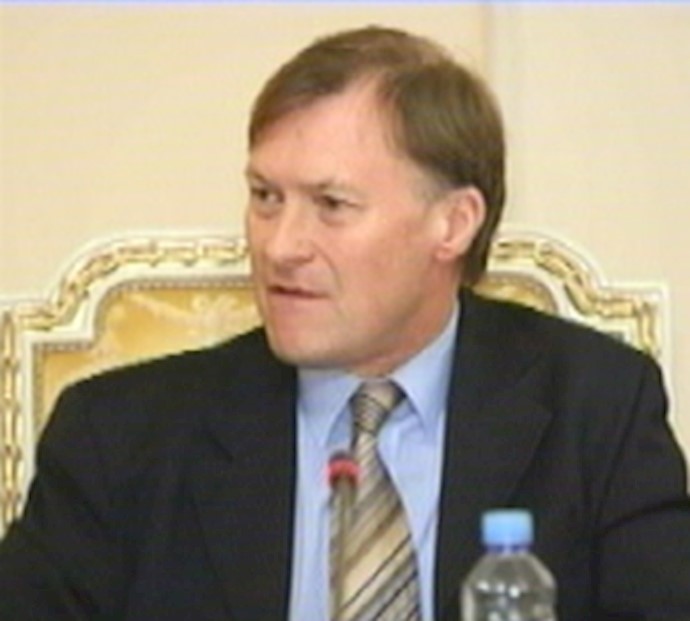
By: David Amess – UK Parliament Member
5/15/2008
As US rhetoric intensifies over Iran’s seemingly incessant support for Iraqi militias, five Iraqi Members of Parliament are believed to have travelled to Iran to meet Iraqi cleric Muqtadr al Sadr, hoping to end the continued bloodshed.
The discussions are believed to be centred on the increasing violence caused by fighters loyal to the cleric in the Southern provinces of Iraq. However, the delegation of Shia Parliamentarians is further looking to clarify the role that Iran is believed to be playing, most significantly in the clashes across Basra.
The meeting seen by many as an opportunity for negotiations and an end to increasing violence, has been spurned by Sadr, whose spokesman on Thursday indicated that the leader had not met the delegation.
This act by a significant delegation of Shia parliamentarians is seen as further evidence of Iraq’s Shias growing increasingly dissatisfied with what they see as Iran’s destructive influence.
Previously, Iraq’s Shia population having faced suppression under former leader Saddam Hussein looked to Tehran as a friend. Both nations built on a majority Shia population in a region of predominantly Sunni countries meant that close ties were inevitable and could well be of benefit to both nations.
However, Iraqis have found their hand of friendship to Tehran rejected over recent years as Iran has run a systematic behind the scenes campaign of fomenting violence through the funding and training of militias loyal to Sadr.
As the delegation travelled to Iran, US top commanding general in Iraq David Patraeus was busy meeting Prime Minister Gordon Brown in London. Patraeus maintained his insistence that Iran is not only showing support for militias in Iraq, but is in fact arming, training and equipping them. Patraeus’s comments are the latest in a long line of allegations made against Tehran by the US administration. Allegations consistently denied by Tehran.
However, Iranian denial has fallen on deaf ears, as evidence piles up of Iran’s direct involvement in much of the violence now spreading throughout Iraq. Shia defiance has clearly grown in recent months, with 300,000 of the most prominent Shia sheikhs in Iraq signing a declaration calling on the Iranian regime to end its negative influence.
It is clear that such dissatisfaction from Iran’s most likely friends in Iraq, offers an opportunity for the Coalition. A tactic previously used to end the activity of Al Qaeda amongst Sunni groups could well be used amongst the Shia population to end Iran’s activity. The tactic masterminded by David Patraeus has been seen as a considerable success with Al Qaeda’s influence dwindling considerably in recent months.
The use of a similar process amongst Iraq’s irate Shia population could well raise similar success. However, one group has always caused heated discussions amongst the US administration as calls for such a policy grow.
The People’s Mojahedin Organisation of Iran (PMOI/MEK) is the largest Iranian Opposition group based in the Iraqi province of Diyala, 40 miles North West of Baghdad. The group believed to be the greatest force for democratic change in Iran has in recent years gained enormous support amongst Iraq’s Shia population as their anger towards Tehran deepens.
However, the group has been labelled as terrorist by the US as well as the UK, a tag which has meant that contact with the group is kept at a minimum. This terror tag on Iran’s Opposition is believed by many to have been an act of appeasement at a time when politicians on both sides of the Atlantic felt that there were moderates within Iran’s leadership capable of bringing about change.
Backed by a decision in the European Court of Justice and a further decision by a branch of the British High Court, support for the de-listing of this group has now grown amongst politicians. The British Court of Appeal may well soon end this terror tag in the UK and there is great hope that the US will follow suit on the back of such a comprehensive judicial finding.
Clearly, supporting the Shia population in Iraq which is calling for the immediate end of Iran’s involvement in their nation offers a hope that an end to this violence is in sight. Unfortunately, without the de-listing of Iran’s largest Opposition group, this process will not be able to achieve the success that it truly could.
David Amess is a member of UK Parliament for Southend West.