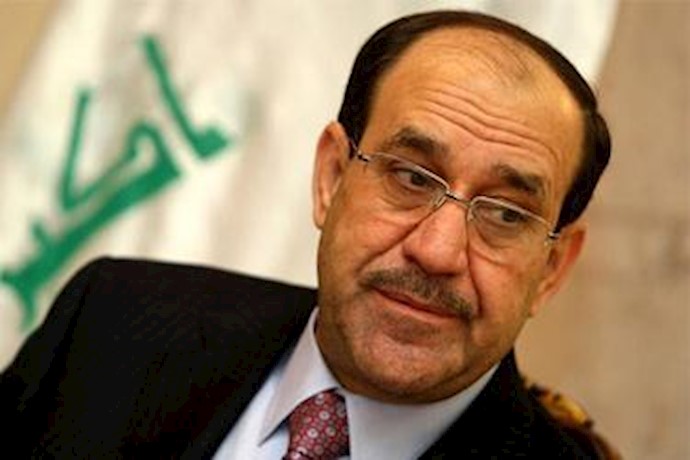
The Wall Street Journal, Baghdad, 18 Jan 2012 – Iraq’s political crisis escalated Wednesday, as two separate groups within the government’s ruling coalition met to discuss the possibility of ousting Prime Minister Nouri al-Maliki, amid a surge in violence.
In Baghdad, Ayad Allawi, the former prime minister who leads a mainly Sunni contingent within government, met with his group to discuss ways to ease Mr. Maliki out of his role, while Kurdish leaders met in Erbil, the capital of the semi-independent Kurdish region, with the same goal.
Moving firmly down this path could plunge the country into further disarray and trigger a backlash from Mr. Maliki who has already threatened to expose some of his opponents’ alleged links to insurgents and involvement in corruption.
Mr. Maliki’s coalition is now on the brink of collapse after the Shiite leader crushed a bid by Sunni-dominated provinces for more autonomy from Baghdad, as allowed under the constitution, and moved to arrest several Sunni politicians. In protest, Iraqiya began boycotting parliament and cabinet sessions. Then, Mr. Maliki this week suspended several of them until they stop the boycotts.
In moves bound to worsen the standoff, Iraqi special forces on Wednesday arrested the deputy chairman of Baghdad’s provincial council, a Sunni, on alleged terror charges.
Some political leaders from across the religious and ethnic spectrum agreed in meetings Wednesday they could no longer work with Mr. Maliki. But they disagreed over how to resolve the impasse.
One camp warned that Mr. Maliki is building a new dictatorship to replace Saddam Hussein’s and must be stopped by forming a transitional government and holding fresh elections to safeguard the country’s fragile U.S.-backed democracy. Mr. Allawi said the government has failed on every front, including the economy, justice, human rights and public services.
‘This is not the state for which we battled the [Saddam Hussein] dictatorship,’ Mr. Allawi, told reporters. ‘On the contrary it represents the return to square one by building a dictatorship in the clothing of the disfigured democracy left behind by foreign troops.’
Other government coalition members fear that such an abrupt move could be a recipe for chaos. They favor dialogue and negotiations to hem Mr. Maliki in.
‘I am for de-escalating,’ said Iraq’s Parliament Speaker Osama al-Nujaifi, a powerful Sunni leader within Mr. Allawi’s political bloc, Iraqiya.
The differences come at a delicate period of heightened sectarian tensions and surging violence both within Iraq and in neighboring Syria, where a bloody standoff between the regime and protesters is taking place. Regional stakeholders including Iran and Turkey are watching both scenarios closely.
In Iraq, at least 260 people have been killed and 500 injured in acts of violence since U.S. troops left on Dec. 18 after a nearly nine-year engagement, according to health and security officials. Iraq’s Shiite majority have borne the brunt of attacks.
Adding to the tension, a Katyusha rocket exploded by the Turkish mission in Baghdad, the first ever, an embassy official said. There were no casualties. The attack coincided with a sharpening war of words between Turkey’s Sunni Islamist government and the Shiite-led rulers in Baghdad, which demanded Monday that Ankara not meddle in its internal affairs.
Iraq’s Shiites have close ties to Turkey’s rival Iran while the Turks have forged warm relations with Iraq’s Sunnis, both Arabs and Kurds.
After addressing journalists, Mr. Allawi, who is a secular Shiite, huddled with his Sunni partners to consider what he said were three options.
These were to push for a transitional government and early elections through a no-confidence vote, to retire Mr. Maliki through negotiations and find a substitute, or to convince Mr. Maliki to relinquish some of his powers, most notably his absolute authority over security forces.
Some ruled out the first possibility. ‘A no-confidence motion against Maliki is unrealistic,’ said Mr. Nujaifi, the parliament speaker. ‘There is not a sufficient [Parliament] majority for this.’
Mr. Nujaifi said he was hopeful about efforts to hold a national conference to resolve the crisis.
Several senior Iraqi officials said Mr. Allawi, along with several Sunni leaders, has been working over the past two weeks to garner enough parliamentary support to oust Mr. Maliki. These officials say he has focused on wooing the Shiite movement headed by cleric Moqtada al-Sadr and the Kurds;both key parts of Mr. Maliki’s government who are increasingly disillusioned with what they say are his autocratic ways.
‘He has ended up like a one-man show,’ said a Kurdish politician about Mr. Maliki.
Kurds, who are represented in the government but also run their own region, met in Erbil to weigh their next moves toward Mr. Maliki. Later they issued a brief statement underscoring the need ‘to protect the political process in Iraq.’
Mr. Allawi’s political bloc, Iraqiya, garnered the most votes in the national elections nearly two years ago but was unable to form the government on its own, pushing it into a tenuous coalition with Mr. Maliki and his Shiite allies and the Kurds in a deal brokered by the U.S.
The current crisis began last month when Mr. Maliki sought to arrest Vice President Tariq al-Hashemi for alleged acts of terrorism, sending Mr. Hashemi into virtual internal exile in the Kurdish region. Mr. Maliki’s opposition accuse him of fabricating the charges, but he has insisted he has no sway over the judiciary.