By Ben Birnbaum
The Washington Times, March 22, 2012
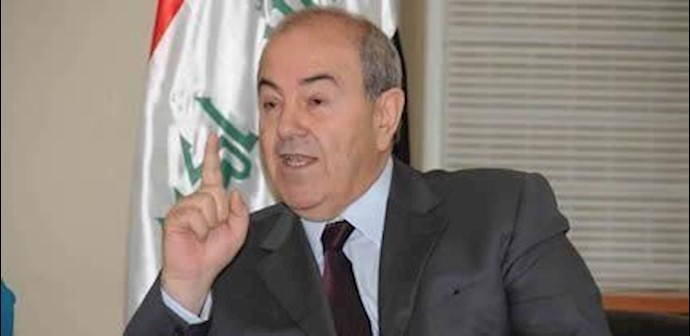
Iraq’s former prime minister says the United States is ignoring an “emerging dictatorship” in his country, telling The Washington Times that Iran is “swallowing” Iraq and dictating its strategic policies.
Ayad Allawi, who served as prime minister from 2004 to 2005, accused Iran of meddling in Iraqi politics to the point that Tehran “is becoming the dominant feature of Iraq,” and claimed that some U.S. officials “concede secretly” that “Iran won, got the best advantage of what happened in Iraq.”
Mr. Allawi made the comments amid political and civil upheaval in the wake of the withdrawal of U.S. troops from Iraq in December. At least 52 Iraqis were killed Tuesday in bomb attacks across the country, and Iraq’s vice president is eluding arrest on terrorist charges that are widely seen as politically motivated.
Meanwhile, al Qaeda attacks like those Tuesday have raised questions about Iraq’s internal security as Baghdad prepares to host a long-delayed Arab League summit Tuesday that is expected to address the threat of a civil war in Syria and messy transitions in Egypt, Libya and Yemen.
“To be honest, people speak about Arab Spring,” Mr. Allawi said. “What spring is this?
“Spring is associated with green, renewal of life. We are having blood pouring everywhere in the region and destruction and dismemberment of countries, and chaos is happening.”
Broken deal
Mr. Allawi headed the Sunni-dominated Iraqiya bloc in Iraq’s 2010 elections. The bloc won two more seats than Nouri al-Maliki’s State of Law alliance, but Mr. al-Maliki was able to form a government under a 2011 power-sharing deal.
That deal, which gave several ministries to Iraqiya, was supposed to have given Mr. Allawi control of a new strategic policy council, but the former premier declined the post when Mr. al-Maliki refused to cede it much authority despite what he called U.S. guarantees.
“The policymakers promised to support this, but ultimately and unfortunately, none of this has happened, and the United States forgot about this power-sharing completely,” Mr. Allawi said. “I think the United States deliberately is taking Iraq out of the screen because there is a gross failure in Iraq.”
State Department spokeswoman Victoria Nuland said: “We strongly disagree with [Mr. Allawi‘s] characterization of our relationship with the government of Iraq and the role we have played to keep the Iraqi political process on track.”
Ms. Nuland said the U.S. Embassy in Baghdad continues to work as a “broker” in Iraq’s political realm and the U.S. remains committed to helping create a “unified, peaceful and democratic Iraq.”
The day after U.S. troops left Iraq, judicial authorities there issued an arrest warrant for another Iraqiya leader, Vice President Tariq al-Hashemi, on charges that he ran anti-Shiite death squads during the bloodletting that followed the U.S.-led 2003 invasion. Mr. al-Hashemi, who denies the charges, has taken refuge in the Kurdish-controlled north.
Mr. Allawi said he is consulting with other power players, including radical Shiite cleric Muqtada al-Sadr, about next steps.
He suggested three ways out of the political crisis: early elections, “full-blown partnership” or replacement of Mr. al-Maliki with another premier from the ruling National Alliance. If none of this occurs, he said, he would encourage countrywide “peaceful demonstrations” against the government.
‘Iran won’
Mr. al-Maliki’s Shiite-led government has long been accused of tilting toward its powerful neighbor, Iran – the object of Western sanctions over its secretive nuclear program, which Iranian officials deny is geared for making a weapon.
Mr. Allawi assailed Iran’s meddling in Iraqi politics, saying the Islamic republic has begun “swallowing Iraq and is becoming the dominant feature of Iraq.” He said some American officials “concede secretly” that “Iran won, got the best advantage of what happened in Iraq.”
He also said a military strike on Iran’s nuclear facilities should be “abolished as an idea” because it would cause regional instability. But he added that Iran’s regime “needs to either change its behavior completely, significantly, radically, or the regime needs to be changed.”
Mr. Allawi said he hopes dialogue with Iran could persuade its leaders to take a new course.
“If they don’t, then it is important to support the opposition inside Iran – to support them politically, to support them with their media, to support them in any possible way, to give them acknowledgment, to give them political assurances, to give them political support in international forums,” he said.
He said that approach would mirror the one he recommended to U.S. policymakers in the run-up to the Iraq War.
“Unfortunately, there were policymakers who were saying that the solution is removal of Saddam [Hussein] by force and immediately pushing a button and creating democracy in the country,” Mr. Allawi said. “And we have seen now, it’s the 10th year, and we don’t have democracy. In fact, we have an emerging dictatorship.”
Mr. Allawi demurred when asked whether he would head Iraqiya in the next elections, tentatively slated for 2014. “I don’t know; it depends,” he said. “Maybe I’ll be arrested by the government or killed or assassinated.”
@@@@@@@@@@@@@@@@@@@@@@@@@@@@@@@@@@@@@@@@@@@@@@@@@@@@@@@@@@@@@22
Clashes rage across Syria despite U.N. statement
By Ben Hubbard
AP, BEIRUT , March 22, 2012 — Syrian troops shelled and raided opposition areas and clashed with rebel fighters around the country Thursday despite U.N. efforts to stop the bloodshed so aid could reach suffering civilians.
Activists cited the fresh violence in dismissing a U.N. Security Council statement calling for a cease-fire to allow for dialogue between all sides on a political solution. The government of President Bashar Assad also played down the statement, saying Damascus is under no threats or ultimatums.
Mounting international condemnation of Mr. Assad’s regime and high-level diplomacy have failed to ease the year-old Syrian conflict, which the United Nations says has killed more than 8,000 people. Activists reported dozens of people killed Thursday, including at least 12 government soldiers.
The Syrian uprising began last March with protests calling for political reforms. Unrest spread as Mr. Assad’s forces violently tried to quash dissent and many in the opposition took up arms to defend their towns and attack government troops.
“Civil strife of the sort we are seeing in Syria can destroy whole societies,” U.N. Secretary-General Ban Ki-moon told reporters in Malaysia on Thursday. Mr. Ban reiterated the statement approved by the U.N. Security Council’s 15 members the day before, which sought to send a unified message on the conflict.
The statement endorsed a six-point plan by former U.N. Secretary-General Kofi Annan, the joint U.N.-Arab League envoy, that includes a cease-fire by Syrian forces, a daily two-hour halt to fighting to evacuate injured people and provide humanitarian aid and inclusive talks about a political solution.
Western countries have been pushing for Security Council action for months, but Russia and China twice have vetoed stronger resolutions that criticized the regime. Wednesday’s presidential statement becomes part of the council’s permanent record but is not legally binding.
To gain Russian and Chinese support, France watered down the text, removing clauses that could be seen as opening the door for sanctions or military action.
Russia and China have called previous resolutions unbalanced for blaming the conflict solely on the government, and Russian officials worry that a strongly worded resolution could allow for military intervention against Mr. Assad, as happened in Libya last year.
Russian Deputy Foreign Minister Mikhail Bogdanov said Thursday that Mr. Annan will visit Moscow in the coming days. Mr. Bogdanov also said Russia will receive a delegation from the National Coordination Committee, a Syrian opposition group.
The U.S. and Europe have called on Mr. Assad to step down but have said they will not intervene militarily. While Qatar, Saudi Arabia and Libya have spoken positively of arming the rebels, no country is openly doing so.
Syria’s state-run news agency, SANA, played down the U.N. statement Thursday, saying there are no threats or ultimatums against Damascus. The news agency’s report echoed an earlier statement by Russia.
Activists in Syria dismissed the statement as too late and impossible to implement since Syrian forces have surrounded entire towns and villages and regularly shell civilian areas.
“Is there any way the army will remove its checkpoints for two hours?” said Fadi al-Yassin via satellite phone from the northern province of Idlib. “All of that is empty talk, politics, and we’ve gotten fed up with all of these decisions.”
Many activists say they’ve grown frustrated with what they see as international resistance to act.
Activist groups said Syrian forces were stepping up their assaults on opposition areas around the country Thursday, often sparking clashes with local rebels.
Regime forces shelled the Arbaeen neighborhood in the central city of Hama and clashed with rebels while trying to enter the northern town of Sarmeen.
The Britain-based Syrian Observatory for Human Rights said 10 people, half of them women and children, were killed when troops fired on a bus taking them from the town. Another activist group, the Local Coordination Committees, said 13 died in the attack on a bus taking the group to a refugee camp in across the border in Turkey. It also reported deaths in government attacks in the central cities of Homs and Hama, putting the nationwide toll at 59.
The Syrian government has barred most media from working in the country, so activist claims could not be independently verified.
The Observatory said troops shot dead three civilians in the town of al-Qusair near the border with Lebanon.
Human Rights Watch accused the government of serious abuses against the town’s civilian population in recent weeks, saying its forces had shelled residential neighborhoods, posted snipers of rooftops and attacked residents as they fled.
The New York-based HRW said Thursday that the town lacks food, water and medical services and suffers a near blackout of communications.
Reflecting the growing militarization of the conflict, rebels killed at least 12 soldiers in attacks on checkpoints and convoys Thursday, the Observatory said.
Syria’s rebels are outgunned by MR. Assad’s large, professional army but have opted for insurgent attacks on military targets.
The Syrian government cites the rise in such attacks to boost its argument that the uprising is being carried out by terrorist groups acting out a foreign conspiracy.
Associated Press writer Eileen Ng in Putrajaya, Malaysia, contributed to this report.