The US State Department is dragging its feet in relocating an Iranian opposition group based in Iraq even as Iran continues to expand its influence in the Middle East, the Washington Free Beacon reported citing testimonies delivered at a Senate Armed Services Committee meeting recently.
Joseph Lieberman, the former senator from Connecticut, said that the administration’s inaction over the past several years may stem from its unwillingness to offend the Iranian regime during negotiations over its nuclear weapons program.
“It leads us to naturally suspect that the Iranians are putting pressure on the Iraqis to do that and maybe on us in diplomatic negotiations,” Lieberman said in testimony before the Senate Armed Services Committee.
The opposition group, the People’s Mujahedin of Iran, has proven a valuable ally of the U.S. in resisting Iran and fighting terrorism. In 2002, it revealed the existence of Iran’s clandestine nuclear weapons program, leading to the Islamic Republic’s estrangement from the international community until 2015.
During the U.S. occupation of Iraq, the MEK helped protect U.S. service members by providing intelligence about enemy activity in the vicinity of Camp Ashraf, where its 2,400 members lived.
“Without their help, I have no doubt that many Americans would not have survived their tour of duty,” Colonel Wes Martin, who led U.S. operations at Camp Ashraf, said. “That is a debt that we can never repay to these fine people.”
When the U.S. withdrew from Iraq in 2011, the Iraqi government agreed to protect the group.
In 2012, the Iraqi government moved MEK to an unsanitary and deserted U.S. military base, ironically called Camp Liberty. That was just the beginning of a long campaign of harassment.
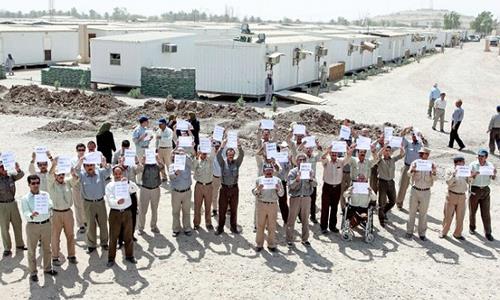
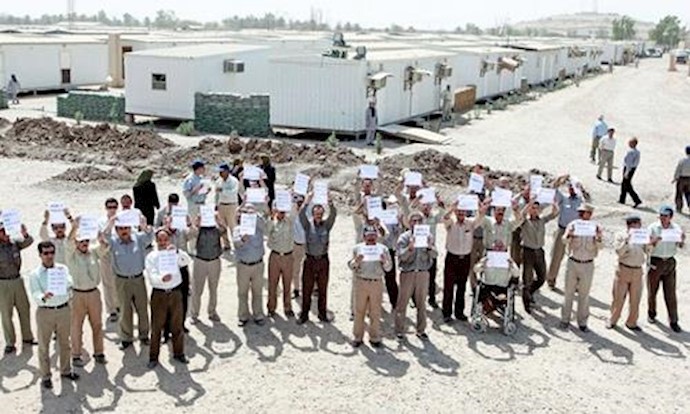
MEK Members of hold signs in Baghdad
“Sometimes they deny food, they deny protection, they turn off the water, they don’t take out the trash or the garbage for days on end,” Gen. Jim Jones said. “It’s just a constant problem.”
More seriously, the Iraqi Army has carried out deadly raids on the MEK that have been denounced as “massacres” by outside observers. A 2011 raid on Camp Ashraf killed 34 and wounded hundreds.
The residents at Camp Liberty are frequently subjected to rocket attacks from Iran and its proxies. Less frequently they are subjected to ground assaults that leave scores dead. This coordinated campaign of violence has been linked to Iran.
The three individuals testifying Wednesday recommended that the residents of Camp Liberty be resettled to another country, possibly the U.S. The MEK rejected an earlier plan to relocate some of its members to Albania because they feared for the safety of members left behind.
Today, two FBI security reviews have concluded that the group does not pose a terrorist threat to the West. Many Western leaders opposed to Iran support the MEK as a viable, secular opposition to the theocratic regime in Tehran.
According to Martin, Secretary of State John Kerry could unilaterally waive the residual restrictions on MEK resettlement to the United States. So far, he has declined to do so.
The GOP-led Senate included provisions for the relief and relocation of the MEK in the National Defense Authorization Act it passed on Wednesday. President Obama has threatened to veto the act over an unrelated budget dispute.