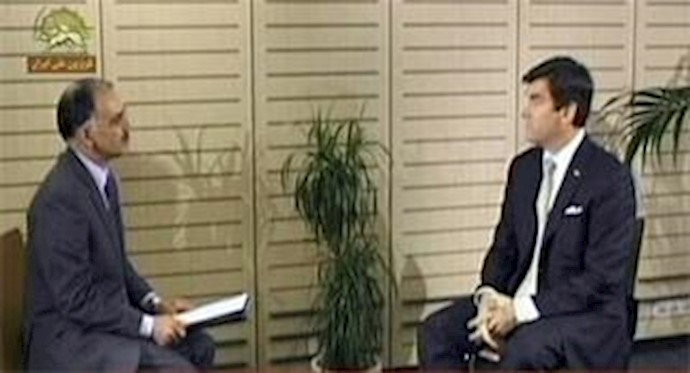
Iran National Television conducted an exclusive interview with Ambassador Mitchell Reiss, former Director of Policy Planning at the U.S. Department of State, on the perspective of Iran’s future following the removal of the PMOI from the US list of terrorist organizations.
What is your opinion about this campaign’s victory to delist the PMOI from the US State Department FTO list?
Well I think it was an important accomplishment, important both symbolically and in substance. I think symbolically it really removes the stigma that hung over this legitimate opposition movement in the United States and overseas and so I think that that was very important for giving it a new life and having people take another look at the legitimate claims of the PMOI and what they stand for.
Substantively, I think that it now opens up a number of different doors that were previously closed both in the US and overseas. It hopefully will pave the way for Madam Rajavi to introduce herself to the American people so they can hear what a strong dynamic leader she really is. I think that is extremely important.
I think it also allows this organization to do more fundraising, more outreach, to have a new lease on life in terms of persuading people that it has something important to say about the future of Iran.
In your opinion, what policy should the US government pursue on Iran? Do you think the appeasement policy has received its reply yet?
I’m not a big fan of appeasement policy in any form for any country. What I think is going to happen is that the Obama administration, once it assembles its new national security team, is going to redouble its efforts to engage or reengage with the Iranians. You’ll also have assessments of how close the Iranians are to acquiring nuclear weapons capability that will proceed on a separate track from the diplomatic track, and one will inform the other. Clearly, the White House is not going to have very much time, but I think its preference is to go down this path. I don’t think it will be successful and that will then present the White House with a significant challenge as to what to do next.
What will be the developments in the region especially regarding Syria and Iran?
Well for some time now I have been arguing both in public and in private that Syria would be an enormous strategic loss for the Iranian regime, and therefore it can’t just be considered on its own. It has to be seen on a broader context of Iranian efforts to destabilize the region. Not just in Syria, but also with its long time support for Hamas and Hezbollah. Removing the Assad regime, not just removing it but replacing it with a stable, multi-confessional, multi-ethnic regime that will eliminate the chemical weapons and recognize the rights of the Syrian people, this would be an enormous loss for Iran. It’s really unclear how that would play domestically. It really would harm, I would argue, the domestic, the shreds of the legitimacy that the regime currently hangs onto, if they lose their only ally in the Arab World. So I have been arguing for a long time that the American administration needs to be much more aggressive in supporting the Syrian opposition. It appears that belatedly we are starting to do that, and I think it would be very important, strategically, if the Assad regime ends, would be a very good thing for all of Iran’s adversaries, all of our friends and allies in the region.
As an expert in US politics, what experience did you have in the Iranian Resistance’s campaign to remove the PMOI from the US State Department list?
I think there are a few lessons. I think first of all it is encouraging that truth will win out over lies and disinformation. It’s difficult in this day and age because it’s so easy to spread misinformation. But I think what we saw was due to the courage and commitment of Madam Rajavi and all the supporters of the MEK and your friends in the United States, and we were able to overturn a listing that really wasn’t justified.
I think it also encourages as a longer term to think about a different future for Iran and the Iranian people. They have been suffering now for decades. It has gone on far too long, and time is running out for the regime in Tehran. They are on the wrong side of history and so I think the delisting gives us a boost, the encouragement and confidence to continue the fight for a free and democratic Iran.