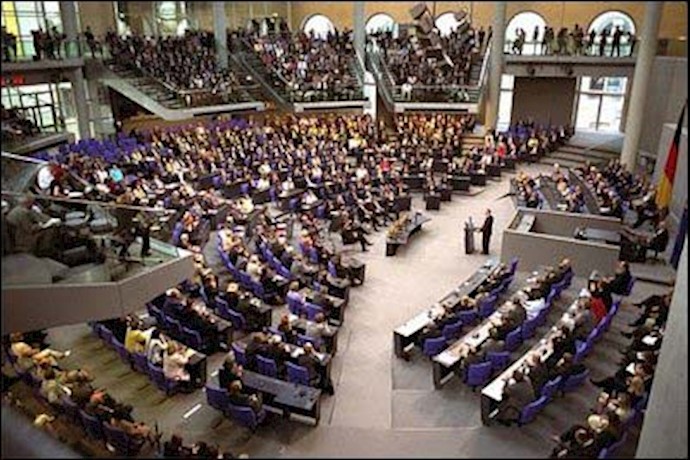
Financial Times, November 24 2008 (excerpts) – A prominent Iranian resistance leader is on Monday expected to meet German members of parliament in Berlin, threatening to strain ties with Tehran at a crucial juncture in efforts to curb its nuclear ambitions.
On her first visit to Germany from her base in Paris Mrs Maryam Rajavi, president-elect of the National Council of Resistance of Iran, an umbrella organisation of the People’s Mojahedin Organisation of Iran, will urge Germany to reject the rule of the Mullahs and support democratic change.
Germany has criticised Iran’s nuclear activities and “delaying tactics” but has faced criticism for failing to support tougher sanctions, in part because of a desire to project valuable trade links.
The NCRI said around 150 of 612 Bundestag members from across the political spectrum have signed a petition urging the government to take a tougher line and to support the Iranian resistance.
European ministers are acting in defiance of a ruling last month by the Court of First Instance – Europe’s second highest court – which said a freeze on PMOI’s assets was unlawful and that the “terrorist” label should be removed.
After years of government obfuscation the UK finally removed the PMOI from its own terror list earlier this year after a court ruled its inclusion was “perverse” and “unlawful”.
The cross-party group of German parliamentarians, including members of Chancellor Angela Merkel’s CDU, will call for the lifting of the EU ban and pledge their support for democratic change in Tehran
“If the global community does not want a nuclear Iran and does not want to be confronted with a war, the only solution is democratic change led by the Iranian people and its resistance,” a petition signed by members of parliament and obtained by the Financial Times will say.
Members of the Bundestag are also likely to draw attention to the approximately 4000 PMOI members in Ashraf, Iraq, who could face expulsion to Iran when US troops hands over authority for the camp to Iraqi forces. Supporters fear these people could face torture or death if they made to return to Iran.