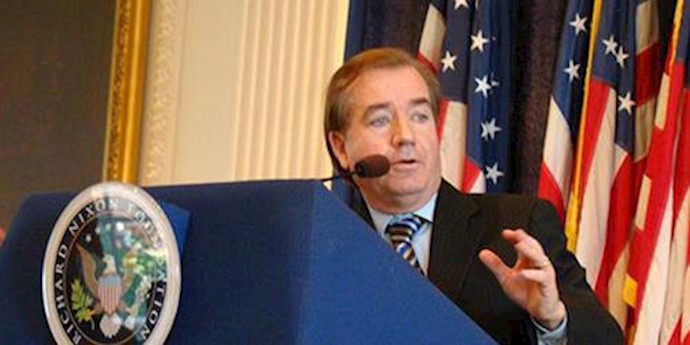
The Washington Examiner – Nov. 6, 2015 – House Foreign Affairs Chairman Ed Royce, R-Calif., said the outlook by the administration and the United Nations is “too optimistic.” Instead, he said the U.S. must help speed up the process to resettle the dissidents to Europe.
In 2004, following the U.S. invasion of Iraq, the MEK residing at Camp Asraf handed over their weapons and submitted to U.S. military protection. This was after the U.S. reportedly bombed the encampment as part of a deal with Iran, which promised to repatriate some members of al Qaeda if the U.S. attacked the MEK.
The U.S. handed over responsibility to protect the dissidents to the Iraqi government in 2009, which moved the group to Camp Liberty in 2012. After Camp Liberty was repeatedly attacked in 2013, the MEK appealed to the United Nations to allow them to return to Camp Asraf, which they said provided better protection.
In the meantime, the U.N. High Commission for Refugees is leading the effort to move Camp Liberty residents out of Iraq, which the State Department says it is committed to assisting.
But the U.S., while supporting the effort to relocate the MEK refugees, has not led the charge by example, said Ali Safavi, a member of Iran’s Parliament in Exile, the National Council of Resistance of Iran of which the MEK is the largest component. Individuals wishing to immigrate to the U.S. must “disavow” their MEK affiliation first, he added.
“At the current rate of relocation, it would take until 2021 for all the inhabitants of Camp Liberty to be relocated — and that’s if Albania accepts more” refugees and if there are sufficient funds available, Safavi told the Washington Examiner.
Former Pennsylvania Gov. Tom Ridge, a Republican who served as the first U.S. secretary of homeland security from 2003-05, says he also backs expedited resettlement.
Until the dissidents are all evacuated, he said the administration should address the attack directly. He said he liked the idea of placing Camp Liberty within the aerial perimeter of U.S. air protection, provided to nearby Baghdad International Airport. This would ensure protection from missiles and mortar attacks.
“I think that’s easily done,” said Ridge. “You can do it with the stroke of the pen, a simple direction from the president or the secretary of state and the United States military command … This will not be enough, but it is about time we start living up to our promises, and this will be a very important and effective first step.”