Call on Secretary Clinton and UN Secretary General Ban Ki-moon
Camp Liberty: A prison for Iranian Dissidents in Iraq
In letters to Secretary Clinton and UNSG Ban Ki-moon, the Iranian dissidents in Liberty present three options that can prevent a tragedy:
Option 1:
Guarantee minimum assurances for safety and security in Camp Liberty
Option 2:
Return dissidents to their home in Camp Ashraf and process resettlement
Option 3:
Immediately resettle the Iranian dissidents in third countries
Text of the February 27th letter to UN Secretary General, sign by all 397 Iranian dissidents in Camp Liberty:
GO TO CAMP LIBERTY OTHERWISE GET KILLED
On February 17, 2012, we were transferred from Camp Ashraf to Camp Liberty under a Memorandum of Understanding (MoU) signed between your Special Representative for Iraq, Ambassador Martin Kobler, and the Iraqi government after a long and disdainful search that went on for 11 hours. We wanted to stay in our lawful home that we had lived in for the past 26 years before being transferred to third countries. But, in an illegal measure, the Iraqi government told the UNHCR that the process for our refugee status determination cannot start until we leave Ashraf. We were offered only two options: Remain in Ashraf and face attack by Iraqi forces and get killed, or got Camp Liberty.
NO PRIOR VISIT TO CAMP LIBERTY WAS ALLOWED
In the past three months our representatives have repeatedly been asking the Special Representative and UNAMI to arrange for a visit to Camp Liberty by a small group of Ashraf residents to evaluate the statue of the camp before our transfer. But, our request was unheeded and rejected.
On January 18, the Special Representative sent us photographs that showed the camp was in a good condition. On January 31, he announced that the “United Nations High Commissioner for Refugees (UNHCR) and the UNAMI Human Rights Office have now confirmed that the infrastructure and facilities at Camp Liberty are in accordance with the international humanitarian standards stipulated in the MoU.”
A SCANDAL
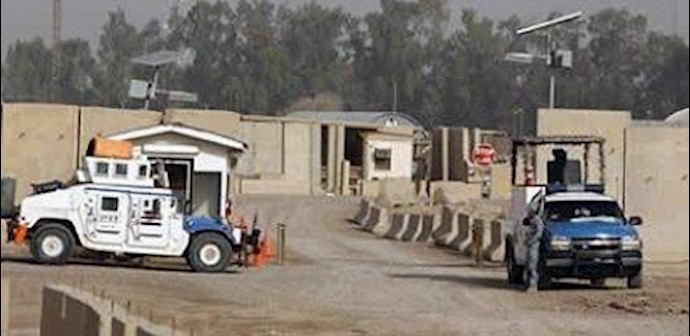
However, when we entered Camp Liberty, the condition of the camp was shocking. It was a place filled with garbage, no drinking or service water, and serious electricity shortages. The sewage system was not working and spread of black-water in the camp seriously endangers the residents’ health. The camp contains extremely dirty worn-out trailers which only a handful of them after repair could be temporarily used. Among us are well-experienced engineers which have turned Camp Ashraf from a barren desert into an advanced city. However, they were prevented to take more than 90% of their vehicles and a large portion of their movable assets including utility vehicles and necessary maintenance tools and equipment. Therefore, our ability is limited. Not only have we been evicted from our homes but we are also denied to construct a temporary home.
A DETENTION CENTRE WITH LOW STANDARDS
The Camp is surrounded by tall walls. There is one police headquarters and several other police posts. 150 armed police, in addition to round the clock patrolling. We were promised 24/7 UN monitoring, but we have 24/7 presence of the armed police inside the Camp. We cannot leave the Camp. Our lawyers are not allowed into the Camp. Access to medical service is subject to permission from Iraqi authorities. In short, Liberty is a detention centre in poor condition. Thus, this is the implementation of the Iranian regime’s plan to eliminate its opponents using Iraqi government an d with UN approval.
DEMONIZATION CAMPAIGN
To cover up this scandal, we are facing a demonizing campaign with the aim of blaming us, the victims, for “lack of cooperation” or even “sabotage”. This is paving the way for the next steps of conspiracy. It is the continuation of the demonizing campaign started 33 years ago by Khomeini, when he said the PMOI tortures its own people to tarnish the image of the “Islamic system”. The Iraqi government, when it killed 36 of our sisters and brothers on April 8, blamed us for the crime.
PREVENT ANOTHER TRAGEDY
Mr. Secretary General,
You have stressed the importance of “Responsibility to Protect” and called 2012 the year of prevention. You can prevent the unfolding disaster against us. We, thus urge you to return us to our home in Ashraf and let the UNHCR conduct its process for refugee status determination in Ashraf. Or to provide our “minimum assurances” in Liberty which was last announced on February 24, 2012.
MINIMUM ASSURANCES
The minimum assurances are as follows:
1. All armed forces and the police station should be taken out of the camp. Espionage cameras and eavesdropping devices must be removed completely. Unarmed police may enter the camp upon coordination with the residents.
2. Direct and free access of the residents to medical services in Iraq, their lawyers and families, and UN’s 24/7 monitoring in Camp Liberty.
3. Freedom of movement for the residents; otherwise, the area of the camp should be increased and the residents should bear no restriction to construct the facilities they need at their own expense.
4. Transfer of the vehicles and movable asses from Ashraf to Liberty without any limitations to be sold or transferred abroad, and selling immovable assets in Ashraf for the expenses of transfer and resettlement in third countries.
5. Providing reasonable infrastructure for the residents including for water used for drinking and services, electricity, appropriate sewage system and necessary sanitary services.
6. Guaranteeing safety and security of all residents with no exception until their resettlement in third countries by UN, U.S. and GOI such that no one is arrested and is not transferred to any other location against his/her will.
7. In order to avoid Liberty becoming a prison, it is imperative that the above items be implemented. If these conditions are not met, specifically if the police continue to remain in the camp, Liberty is already a failed experience and the transfer of other residents to Liberty is not possible. In Any case, according to the ‘revolving door’ procedure that the UNHCR is willing, new groups of residents will be transferred only when the current 400 residents have been resettled in third countries.