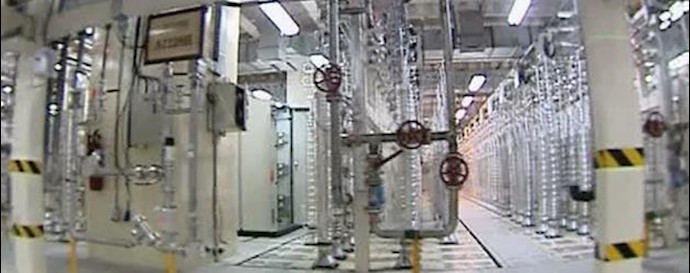
April 17, 2015 – The U.N. nuclear watchdog conducts regular inspections of Iran’s nuclear facilities and these will be increased if world powers and Iran can finalize their outline agreement by a June 30 deadline.
Such a deal will see Iran dramatically scale down its atomic activities. Combined with tighter U.N. inspections, this will make any dash to make nuclear weapons extremely difficult and easily detectable.
Talks on this could resume as early as next week.
However, the International Atomic Energy Agency also wants Iran to answer allegations that prior to 2003, and possibly since, Iran’s nuclear program had “Possible Military Dimensions” — “PMD” for short.
This means alleged research by Iran into how to make a nuclear bomb such as high-explosives tests and looking into how to explode fissile material in a missile’s warhead.
An IAEA probe into this has been stalled since August. On Wednesday though, the IAEA’s Chief Inspector Tero Varjoranta was due to hold a new round of talks in Tehran.
The allegations are based largely on information passed to the IAEA by unnamed other countries and deemed by the watchdog to be “overall, credible” in a major 2011 report.
Some analysts say that Iran still has a case to answer.
“…There is no doubt … that Iran pursued nuclear weaponization work,” Mark Fitzpatrick, a former U.S. State Department official now at the International Institute for Strategic Studies in London, told AFP.
The six world powers agree that Iran cannot continue stonewalling, not least because clearing up what happened in the past is vital for having confidence that Iran will stick to its commitments in the future.
“In a final deal Iran will not be let off the hook for its past work,” Kelsey Davenport at the Arms Control Association told AFP. “It is vital for the IAEA’s credibility.”
Western officials have made clear that Iran’s main aim in the hoped-for deal with major powers — getting painful sanctions lifted — will not happen until the IAEA’s questions are addressed.
“PMD (possible military dimensions) … is part of the package. It is necessary to get sanctions relief,” a European official involved in talks said.
All U.N. Security Council nuclear-related resolutions will be lifted “simultaneous” with the completion of “actions addressing all key issues” — including PMD, according to a U.S. State Department fact sheet.
The same document — disputed by Iran as a mixture of “truth and lies” — says that Iran will be “required to grant access to… suspicious sites.”
State Department spokeswoman Marie Harf said Friday that it would be “very difficult to imagine (a final deal) that did not require… access at Parchin.”
Iran though rejects the IAEA’s claims, saying they are based on forgeries supplied to a gullible and partial watchdog by its enemies. Parchin, it says, is not a nuclear site so the IAEA has no right to go there.
A possible solution, therefore, might be to have a “fudged” admission, Fitzpatrick said, with Tehran saying the dirty work happened before the fatwa and putting the blame on “rogue” scientists.
Without this, or if Western nations make “politically impossible demands for acknowledging culpability,” PMD is “one of the ways” the whole deal could yet fall apart, he said.