
ABU DHABI – Battling ISIL, restoring security in the region and tackling concerns related to Iran and Syria are some of the key elements the US Vice President said he would work on with the UAE.
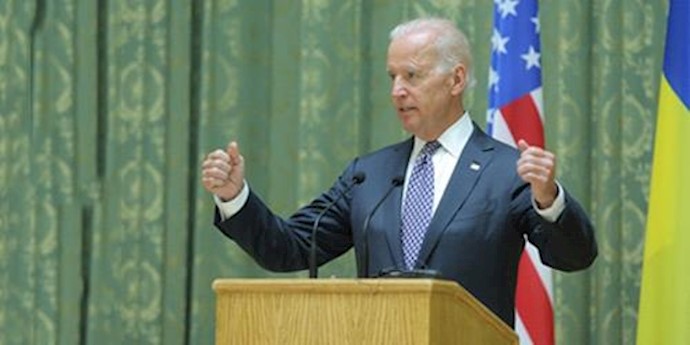
In an exclusive interview with The National during his first visit to the UAE, Joe Biden sent a message of reassurance to his Gulf allies that the US is unequivocally committed to strengthening and stabilising the region.
Mr Biden arrived just after midnight on Monday and was greeted at Al Bateen Airport by Reem Al Hashemi, Minister of State for International Cooperation, Yousuf Al Otaiba, UAE ambassador to the United States, Barbara Leaf, US ambassador to the UAE.
He called the relationship between the UAE and the US “one of the most significant in the region”, as the country’s diplomatic mission doubled in the past 10 years.
The UAE plays a vital role in advancing the region’s security and stability, Mr Biden said — an issue he will discuss with Sheikh Mohammed bin Zayed, Crown Prince and Deputy Supreme Commander of the Armed Forces, and Sheikh Mohammed bin Rashid, Vice President and Ruler of Dubai on Monday and Tuesday, respectively.
“Through the Gulf Cooperation Council, we’re enhancing our efforts to coordinate a united, regional approach to address the ongoing conflicts in Syria, Iraq, Yemen and Libya. We’re improving our ability to work together on a broad range of issues, from cyber and maritime security to ballistic missile defence and counter-terrorism. And I can assure you that the United States will continue to live up to our commitments in the region. We are clear-eyed about the difficulties [it] is facing.” Mr Biden said.
Iran was also on the agenda, after UAE ambassador to the US, Yousef Al Otaiba, last month said the country continued to spread instability in the region following the nuclear deal. “We understand clearly the challenges its actions pose in the region,” Mr Biden said. “That’s why we worked so hard to achieve a nuclear agreement with Iran — because as dangerous as Iran’s actions are, they would be exponentially greater if Iran possessed a nuclear weapon. Now that we are implementing the deal, we have effectively closed off every path that Iran could take to develop a nuclear weapon and the region is safer as a result.”
Steps were being taken, he said, to bolster the security of the UAE and GCC to be able to “deal with Iran diplomatically from a position of strength”.
Last month, Arab League secretary general Dr Nabil El Araby said wiping out terrorist groups was vital to ensuring the region’s future.
But with eight armed conflicts raging in the region, Mr Biden called for dialogue as the best way to address them. “In addition to conflicts in Syria, Iraq, and Yemen, we’re dealing with the biggest humanitarian crisis since World War II,” he said. “Terrorist threats are real and ongoing. There are complex relationships, sectarian tensions and long-standing political differences. But these challenges are too big for any one nation to meet alone and without dialogue, we won’t make progress toward resolving the conflicts in Syria or Yemen or toward reducing the sectarian tensions that are tearing the region apart.”
Source: The National, 7 March 2016