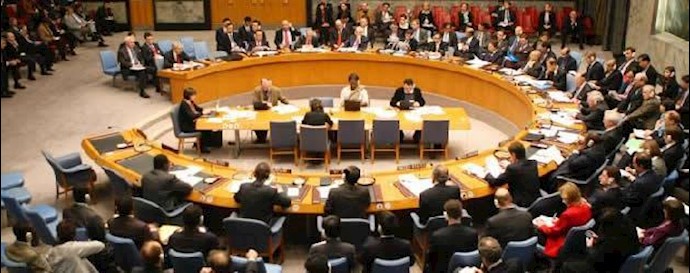
The United States Wednesday circulated a draft resolution in the United Nations Security Council that would lift all international sanctions related to the Islamic Republic’s nuclear program; but a U.N. arms embargo will remain in place for five years and one on ballistic missiles will continue for eight years.
Opposition is unlikely, as the five veto-holding council members – Britain, China, France, Russia and the United States – are all parties to the deal, so a vote could take place in the coming days. The accord agreed to in Vienna calls for Security Council “adoption without delay.”
U.S. Ambassador to the United Nations Samantha Power had said the United States would submit the draft resolution on behalf of the five powers, Germany and the European Union. She said it will endorse the deal and “take other important steps, including replacing the existing Security Council sanctions architecture with the new, binding restrictions agreed on in Vienna.”
The resolution is expected to terminate all provisions of previous U.N. sanctions resolutions imposed on Iran over the past nine years, simultaneously with the IAEA-verified inspections of agreed nuclear-related measures by Tehran and will establish specific restrictions.
Speaking to reporters, Russia’s U.N. ambassador, Vitaly Churkin, said, “This is one of the most complicated, imaginative and interesting draft resolutions the Security Council has ever considered.” He said proper consideration should be given to the 10 elected council members who were not part of the nuclear negotiations to review and understand the text, adding, it is “a long resolution; it is a very detailed resolution.”
The United States has made clear, however, that if Iran violates the deal, sanctions will “snap back” into place.
“It does not mean that they are going to be stopping their support of Houthis in Yemen, or the Hashd [Shi’ite militias] in Iraq, or the support of [Bashar] Assad in Syria or the support of Hezbollah in Lebanon,” cautioned Randa Slim, a scholar at the Washington-based Middle East Institute.
VOA News, United Nations, 15 July 2015