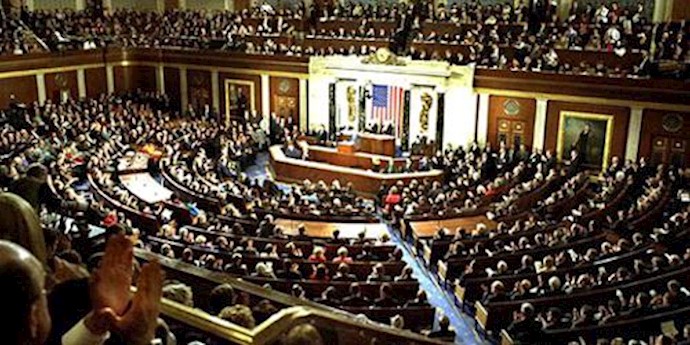
Senators expressed concern Tuesday that there are divisions within the Obama administration over how to enforce the Iran nuclear deal and said sanctions legislation they are drafting could help clear up any inconsistencies in the United States’ stance toward Tehran.
Lawmakers have been alarmed by recent reports that the United Nations Security Council probably won’t take punitive action against Iran for ballistic missile tests and that the United States may try to better facilitate trade between Iran and the European Union. Senators said they have received inconsistent answers from administration officials when they’ve sought answers on these issues.
Senate Foreign Relations Committee Chairman Bob Corker (R-Tenn.) said at a Tuesday hearing that while he is comfortable with the reassurances he’s received from the Treasury Department and Acting Undersecretary for Terrorism and Financial Intelligence Adam Szubin – whose confirmation is pending before the Senate – he is perplexed by some of the public statements from Secretary of State John Kerry.
“There’s not congruence now at the administration level,” Corker said at a hearing on Iran. “I get the sense that there’s a desire by [Kerry] to accommodate, to bend, to make this work more than the agreement states it should for Iran.”
Corker and Sen. Ben Cardin (D-Md.), the committee’s ranking member, have been working for several weeks on a bill to step up sanctions on Iran. The legislation being drafted would increase available penalties for ballistic missiles and conventional weapons, and renew the Iran Sanctions Act (ISA), the law that outlines trade, energy, defense and banking sanctions over Iran’s nuclear and missile activities, but expires at the end of the year.
Cardin took a kinder, help-us-help-you approach at the hearing as he implored Under Secretary of State for Political Affairs Thomas Shannon to support the legislation, while also expressing concern that the administration is not speaking with a single voice.
“There’s a common agenda in the administration, but there’s a different attitude in State Department, Defense, Energy, Treasury, the White House,” Cardin told Shannon. “I think you could play an important role in bringing us together, with a strong statement by the United States Congress, getting us to pass legislation that can help you in this effort.”
Congress is bent on stepping up sanctions, especially now that the U.N. Security Council seems unlikely to slap penalties on Iran for recent ballistic missile tests, due to murky legal language. The Iran deal only “calls upon” Tehran not to engage in such tests, which is a downgrade from the pre-deal resolution it replaced that flatly said Iran “shall not” engage in such activities.
Administration officials argue that the switch is “a distinction without a difference,” as Shannon again put it Tuesday, but have also shied away from calling the ballistic missile tests a “violation” of the nuclear deal.
Lawmakers said a powerful statement from Congress could spur the international community to change its collective mind.
“You’ve seen it over and over again: If the United States is not prepared to take a very strong stance, it’s difficult to get the type of attention internationally,” Cardin said, recalling that earlier this year, the U.N. adopted stiffer measures against North Korea only after Congress passed sanctions against Pyongyang. “Let’s not be bashful about the need for U.S. leadership. The Congress has a critical role in that.”
At this point, Cardin and Corker are close to unveiling their bill, but are stuck on a few details. They agree that ISA should be renewed – despite the admonitions of the administration to “not be in a rush,” which Shannon repeated on Tuesday. They also agree that something must be done in response to Iran’s ballistic missile tests – and that whatever punitive measures they take should be mandatory.
But while Cardin wants to work with the administration to provide “a strong congressional basis for sanctions” that have already been issued by executive order, Corker is worried administration officials will take too much liberty with their ability to waive penalties – maybe even to the point of striking another deal with Iran.
Corker said he wants to be sure “no president can use a waiver to enter into an international agreement. Right now, that’s what’s separating us.”
A desire by Republicans to include language in the legislation that would give the administration less flexibility in how it implements the nuclear deal could also hold up the bill.
Several lawmakers wanted assurances Tuesday that the administration would use its veto power at the U.N. Security Council to block any deal that would send weapons to Iran, especially those being orchestrated by Russia.
Corker also floated the idea of including language to make it clear that Iran could not trade with Europe in U.S. dollars. Republicans were upset at recent rumors that the administration would allow this to occur although the Treasury Department scrambled to say it wasn’t true.
Kerry, however, added to the tensions with regard to this issue when he said on MSNBC Tuesday morning that Iran “deserves the benefits of the deal they struck.”
After checking with Shannon that codifying a prohibition against Iran getting access to dollars would not upset the nuclear deal, Corker said: “we’ll attempt to do that.”
Source: The Washington Post, April 6