WASHINGTON – Nov 10, 2014 (Reuters) – Iran has stopped a controversial practice that could allow it to enrich uranium faster, the United States said on Monday, ceasing an activity one expert saw as violating an interim nuclear deal.
The International Atomic Energy Agency issued a confidential report about Iran to its members on Friday saying that since its previous report in September, Iran had intermittently fed natural uranium gas into a so-called IR-5 centrifuge.
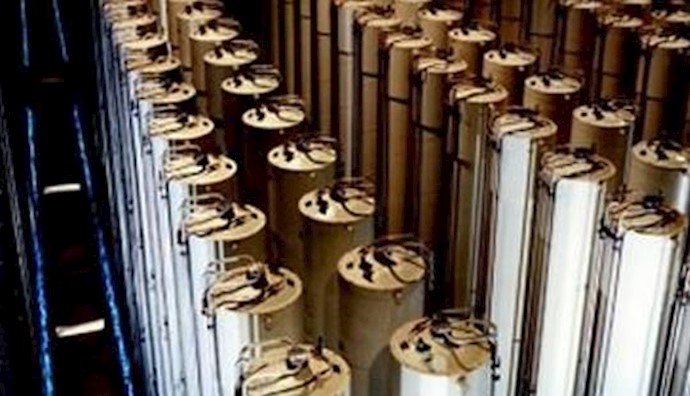
The IR-5 is one of several new centrifuge models that Iran has been seeking to develop to replace the erratic, 1970s vintage IR-1 centrifuge that it now uses to produce refined uranium, a material that can be used to produce a nuclear bomb.
Iran’s development of advanced enrichment centrifuges is sensitive because, if successful, it could enable the country to produce potential nuclear bomb material at a rate several times faster of the decades-old model now in use.
Asked about the matter, U.S. State Department spokeswoman Jen Psaki told reporters that Iran had agreed to cease injecting the gas into the IR-5 centrifuge.
“We raised that issue with Iran as soon as the IAEA reported it, and it was resolved immediately,” Psaki said. “The Iranians have confirmed that they will not continue that activity as cited in the IAEA report, so it’s been resolved.”
She did not take a stance on whether the activity violated an interim agreement reached between Iran and six major powers last year under which Iran agreed to curb its nuclear program in exchange for limited economic sanctions relief.
Iran and the six powers – Britain, China, France, Germany, Russia and the United States – are trying to negotiate a comprehensive agreement under which Tehran would restrain its nuclear program in exchange for relief from economic sanctions.
U.S. Secretary of State John Kerry met Iranian Foreign Minister Javad Zarif in Muscat on Monday as negotiators worked to reach a comprehensive deal before a Nov. 23 deadline.
The Institute for Science and International Security, a U.S. think tank that closely tracks Iran’s nuclear program, issued an analysis saying “Iran may have violated (the interim accord) by starting to feed (natural uranium gas) into one of its advanced centrifuges, namely the IR-5.”