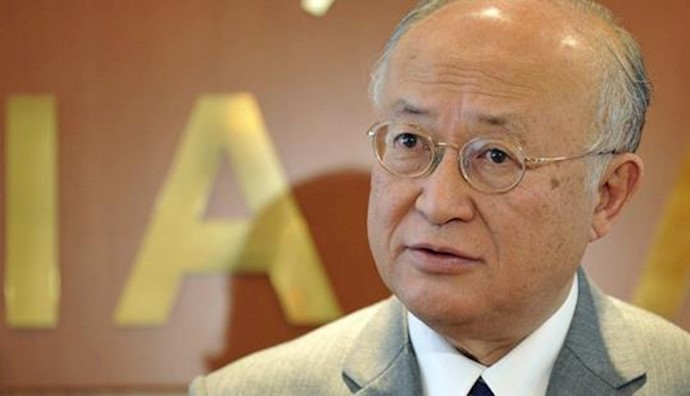
New York Times – 01 Nov 2014 — At a moment when American negotiators say they see some signs of movement on the part of Iran toward a broad nuclear deal with the United States, the head of the United Nations nuclear inspection organization declared Friday that Iran had stopped answering the agency’s questions about suspected past efforts to design the components of a bomb.
The director general of the International Atomic Energy Agency, Yukiya Amano, said commitments Iran had made to provide more information on what he called “possible military dimensions” had not been carried out. He said that while he had received assurances from Iran’s president, Hassan Rouhani, that he was “willing to clarify the ambiguity” in documents and computer records that appear to show work on a variety of technologies that can be used to detonate a weapon, the cooperation had not been forthcoming.
“What is needed now is action,” Mr. Amano said, referring to a list of about a dozen issues that Iranian officials have declined to answer for years. Mr. Amano’s comments pointed up a key question about the negotiations that American officials have been loath to discuss in public: In a final deal, would Iran be required to publicly admit its past activities, or merely provide a mechanism for monitoring its actions in the future? For years American and I.A.E.A. officials have insisted that Iran must provide access to the scientists and research and development sites that were the basis for intelligence reports that it had a fast-paced nuclear program until the end of 2003.
Mr. Amano noted in his speech that several of the facilities now under inspection were once covert. But he focused most of his attention on Iran’s reluctance to answer questions, based on intelligence provided by the United States, Israel and other countries and in some cases supported by the agency’s own findings, about suspected work on weapons designs. Mr. Amano, like his predecessor, negotiated with Iran on a schedule for answering the questions. And, like his predecessor, he has discovered that Iranian officials have dragged their feet.
So far the Iranians have refused to allow the I.A.E.A. to interview leading scientists who ran the programs, including Mohsen Fakhrizadeh, identified by the United States and the United Nations as the leader of many of the covert design projects.