
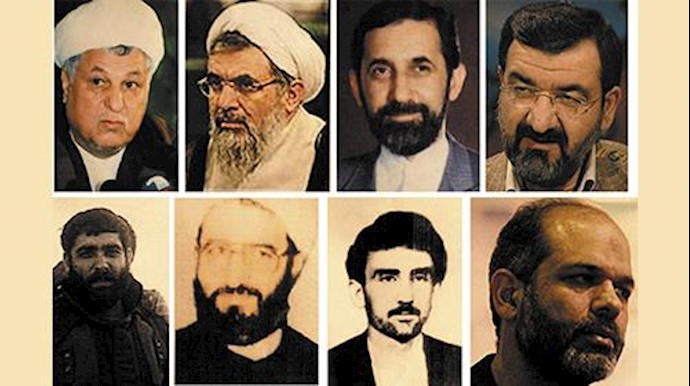
The Tower, Jan. 13, 2017 – Former Iranian President Ali Akbar Hashemi Rafsanjani died on Sunday at the age of 82. A New York Times editorial published after his death praised him and called him a “pragmatist.” This is an odd description of someone who has been implicated in planning terror attacks on foreign soil while he was president. The Times‘s own obituary mentioned that a German court found that Rafsanjani and Supreme Leader Ali Khamenei had approved the 1992 killing of four Iranian dissidents in a Berlin restaurant, and that Argentinian investigators tied him to the 1994 bombing of the AMIA Jewish center in Buenos Aires, which killed 85 people. The 1996 bombing of the Khobar Towers housing complex in Saudi Arabia, which killed 19 American service members, was also planned by Rafsanjani, according to Louis Freeh, who was the FBI director at the time.
Despite all this, Rafsanjani was considered by many to be a “moderate.” This shows, as Matthew Levitt of the Washington Institute for Near East Policy observed when Hassan Rouhani (another reputed moderate) won the presidency in 2013, that “the Islamic Republic’s history indicates that ‘moderate’ or ‘reformist’ presidents do not translate into moderation of Iran’s terrorism sponsorship.”
The Times editorial also portrayed Rafsanjani as someone who “felt that establishing relations with the United States was the best way to ensure the future of Iran’s theocratic system.” This outreach, which his protégé Rouhani expanded upon, led to the 2015 nuclear deal, which absolved Iran for its past violations of the Nuclear Nonproliferation Treaty and freed up billions of dollars that Iran would eventually use to build up its military. Despite this, the Times wrote that nuclear deal is worth keeping as an encouragement to Iran’s moderate forces. But Rafsanjani was an ideologue not a pragmatist, and the nuclear deal was not a triumph for Iran’s moderation. The Iranian regime still views the United States as its enemy and will likely continue violating the nuclear agreement, as the International Atomic Energy Agency has repeatedly admitted that it has done. Rafsanjani’s death changes nothing in Iran, and it doesn’t damage the standing of Iran’s moderates, as all moderates have effectively been purged from the ruling class.
The Pragmatic Murderer
RELATED ARTICLES