

The New York Times probably the most dogmatically liberal newspaper in the nation has twice recently reported on its former best friends in strongly critical terms, Washington Times reported.
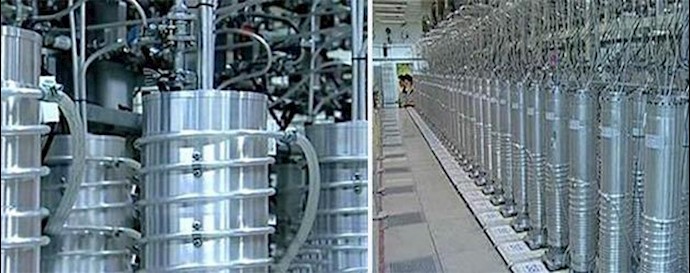
One of the two was the June 4 article in which The New York Times reported that, despite President Obama’s and Secretary of State John Kerry’s assurances to the contrary, Iran has increased its stockpile of enriched uranium during the past 18 months. The president contended that the Iranian nuclear weapons program has been “frozen& for that period.
The dangers posed by completion and signing of the Iran nuclear weapons pact, now scheduled for the end of this month, surpasses them all.
Given the facts of the negotiations, it’s impossible to see how any deal with Iran could possibly benefit American national security or that of any of our allies, especially including Israel, whose very existence Iran has promised often to end.
The facts begin with the manner of the negotiations, which have been going on for several years. The temporary agreement, signed in November 2013, was supposed to freeze Iran’s uranium enrichment, halt its installation of new enrichment centrifuges, and stop work on its heavy-water reactor and plutonium production. Now, as the Times reported, we know that the International Atomic Energy Agency of the United Nations says the enriched uranium supply is increasing, not stopped or decreasing.
Mr. Kerry will, nevertheless, Broken leg or not, he and Mr. Obama make up the lamest of the lame actually, the most incompetent of negotiators.
If that were not enough to prove the impossibility of success in the Iran negotiations, consider the recently leaked Pentagon report on Iran’s military power. It says, in part, that, despite the November 2013 interim agreement, Iran hasn’t changed its national security and military strategies over the past year. It says Khamenei remains atop the Iranian power structure and is the commander in chief of its military. Most importantly, it says Iran has continued its development of ballistic missiles to counter the threats it perceives from the United States and its allies, including Israel.
Those ballistic missiles, which will be nuclear-capable, are not even included in the Obama-Kerry negotiations. They will be outside any possible deal.
In every political failure, how the Obama administration reacts to criticism is a good gauge of the seriousness of the failure. The apparent and probably temporary failure of The New York Times to toe the administration’s line has brought about a strong reaction from the Obama team.
At this stage there is nothing on the merits to propel further negotiations with Iran. The Iranians have, from the beginning, taken the maximalist positions to force an agreement that will be on their terms and enable them to continue their development of nuclear weapons and the missiles to deliver them anywhere in the Middle East, Europe and eventually to any target in the world.
Mr. Obama and Mr. Kerry have proceeded with the negotiations unwilling to accept a basic fact: In the 36 years since the Iranian mullahs’ have assumed power in Iran, there is not a single instance in which diplomacy has succeeded in changing Iran’s course of action. To believe this agreement will is to deny history. It will only serve to ensure that, whenever it desires to, Iran will develop and deploy nuclear weapons.