
Tensions between Iran and the United States, never far from the surface, showed signs of worsening on Wednesday, with the Iranians threatening to block a vital Persian Gulf access route and protesting what they called the American “meddling approach and tone.”
The Iranian messages, conveyed in statements by a commander of the Islamic Revolutionary Guards Corps and by the Foreign Ministry, came a few days after Ali Khamenei, the supreme leader, expressed exasperation with the United States, questioning the longstanding deployment of the Navy’s Fifth Fleet in the Persian Gulf.
Together, the messages appeared to reflect a steady buildup of anti-American sentiment in Iran recently despite the nuclear agreement that took effect in January, which, on paper at least, eased the country’s economic isolation. American and Iranian diplomats had hoped the agreement would help lead to a new period of détente in the estranged relations between their countries.
But the Iranians have not yet benefited economically and have accused the United States of obstructing their ability to do business and attract investments, in part because of other American financial restrictions unaffected by the nuclear agreement.
The Iranians have also taken note of efforts by some lawmakers in Washington who opposed the nuclear agreement and who have warned against a resumption of commercial dealings with Iran.
On Monday, for example, three members of Congress sent a letter to Boeing’s chief executive, Dennis A. Muilenburg, urging him “in the strongest possible terms” not to execute any sales to Iran, which the company is considering after meeting with Iranian aviation officials last month.
The Iranians have also been seething over an April 20 Supreme Court ruling that permitted the use of nearly $2 billion in seized Iranian assets to compensate American victims of overseas attacks that United States officials have attributed to Iran despite its denials. Iran remains on the State Department’s list of state sponsors of terrorism, another sore point with the Iranians.
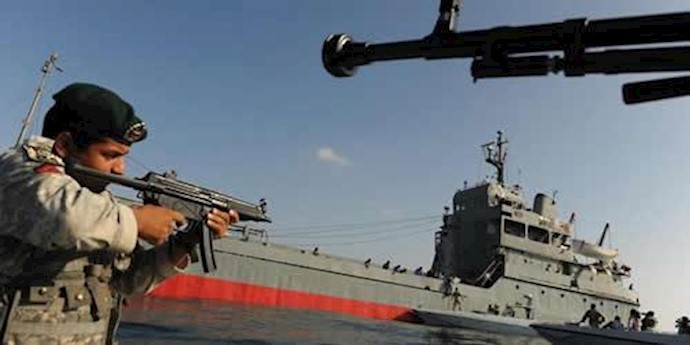
The warning from the Revolutionary Guards about blocking American access to the Persian Gulf waterway known as the Strait of Hormuz, a vital oil shipping route, appeared to be partly a response to a congressional resolution introduced April 28 by Representative J. Randy Forbes, Republican of Virginia.
On Wednesday, Iran’s Fars News Agency, which has links to the Revolutionary Guards, said Lt. Cmdr. Brig. Gen. Hossein Salami had issued a warning to the United States to avoid escalation.
“Iran will decisively confront any menacing passage through the Strait of Hormuz,” Fars quoted him as saying. “We warn the Americans not to repeat their past mistakes, and they should learn from historical realities.”
In what appeared to be a coordinated message, the Foreign Ministry delivered a note of protest on Wednesday to the Swiss Embassy in Tehran, which represents American interests. The official Tasnim News Agency [affiliated to the terrorist Quds force] said the note, referring to Mr. Forbes’s resolution, “slammed Washington’s meddling in the security affairs of the Persian Gulf and strongly objected to the use of a fake name for the body of water in a resolution proposed by a U.S. congressman last week.”
Political analysts in the United States noted that the Strait of Hormuz has long been a potential flash point for American-Iranian animosity, but questioned whether Iran would risk a military confrontation by closing it or denying American access.
Source: New York Times, May 4, 2016