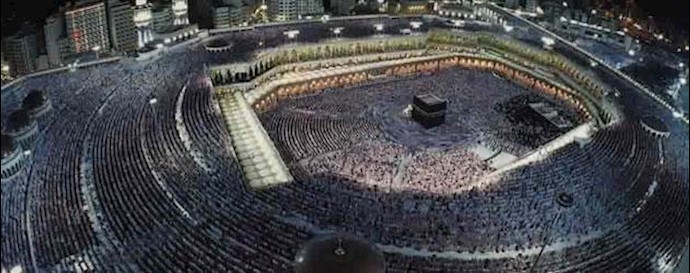
For regional adversaries at loggerheads over the crises in Iraq, Syria and Yemen, the disaster at the haj is unlikely to be a game changer in the contest between Iran and Saudi Arabia, merely adding venom to their mutual acrimony, Reuters reported Sept. 28, 2015.
But a deepening of already profound mistrust between the Sunni kingdom and the Shi’ite theocracy will make the task of stabilizing the Middle East’s many trouble spots even harder to achieve than it already is.
While the Gulf rivals have managed to put aside bad blood after past flare-ups, such moments of detente happened in a much more stable Middle East, years before turmoil in Iraq and Arab Spring uprisings unleashed sectarian hatreds across the region.
Riyadh accuses Tehran of fomenting trouble in Bahrain and even Saudi Arabia itself.
Demonstrators protested in Tehran, chanting “Death to the Saudi dynasty”. Saudis commentators insinuated that Iranian pilgrims themselves were at fault.
“It’s a lie that Satan’s representative, Khamenei, mourns the Mina incident victims,” Saudi prince Khaled Al Saud tweeted, referring to Iran’s Supreme Leader Ayatollah Ali Khamenei.
“DIRTY HANDS”
“His dirty hands are stained with the blood of the children of Syria and the Sunnis of Iraq,” the prince told his nearly quarter of a million followers.
Even before the Hajj tragedy, prominent figures in both countries exchanged critical tirades. In May, Khamenei denounced Saudi Arabia for its military campaign in Yemen by comparing the kingdom to the pagans who ruled the Arabian Peninsula before the advent of Islam in the seventh century.
At the United Nations, Iranian President Hassan Rouhani on Sunday lamented that Riyadh had rebuffed his repeated attempts at reconciliation since his election in 2013.
“We are disappointed about the cold relations between Iran and Saudi Arabia,” he said. “The rift between Tehran and Riyadh is not in the interest of either country.”
Saudi Foreign Minister Adel al-Jubeir, a longtime adviser to the kingdom’s rulers, wearily accused Tehran of playing politics. “We will reveal the facts when they emerge, and we will not hold anything back,” he said.
Saudi commentators point the finger at Tehran.
Jamal Khashoggi, head of a Saudi news channel owned by a prince, said investigators were looking at the actions of a large number of Iranian pilgrims who “happened to be in the wrong place in the wrong time”.
“I think Saudi Arabia will speak very loudly on the issue when the result of the investigations comes out. No statement has been made officially, but now it seems that the Iranians will be blamed because they took their hajjis in the wrong direction at the wrong time. That was very irresponsible,” he said.
A late 1990s rapprochement followed a 1996 truck-bombing in the kingdom that killed 19 U.S. service personnel and clashes at the 1987 haj between Iranian protesters and Saudi police that led to the death of 400 people, mainly Iranians.
Saudi Arabia and the United States accused Iran of orchestrating the 1996 attack. Iran denied any role.
But the rapprochement happened at a time of relative Gulf stability, above all when Iraq was ruled by a Sunni, Saddam Hussein, seen by Gulf Arab states as a buffer against Iran. Now a worsening of Iran-Saudi rivalry could have broad consequences.
INFLUENCE
Alive to what he sees as a U.S.-Iran detente, Saudi Arabia’s new monarch, King Salman, is pushing for Sunni Muslim Middle East countries to set aside differences over political Islam and focus on what it sees as the more urgent threat from Tehran.