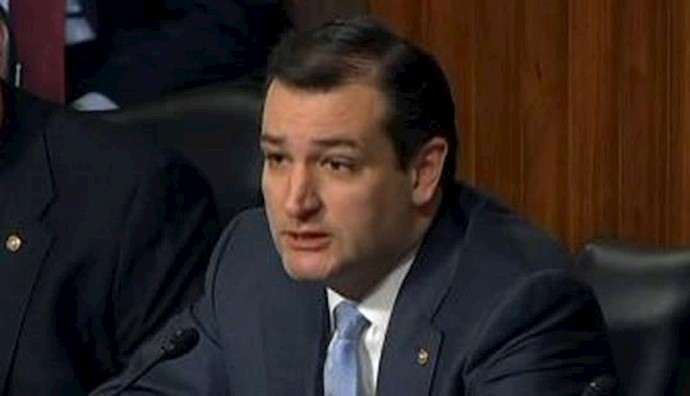
Iran has chosen a former hostage-taker involved in the 1979 seizure of the U.S. Embassy in Tehran to serve as its ambassador at the United Nations, Sen. Ted Cruz said Tuesday April 1st in vowing to bar him from entering the United States.
Cruz said it was outrageous that Iran had selected Hamid Aboutalebi, who was a member of a Muslim student group that held 52 Americans hostage for 444 days, and was seeking a visa for him.
The Texas Republican said he was offering legislation to ensure that Aboutalebi would be prevented from entering the country.
“It is unconscionable that in the name of international diplomatic protocol the United States would be forced to host a foreign national who showed a brutal disregard of the status of diplomats when they were stationed in his country,” Cruz said in a speech on the Senate floor.
“This person is an acknowledged terrorist.”
Hamid Babaei, a spokesman for Iran’s Mission to the United Nations, had no comment Tuesday on his government’s choice for ambassador.
Iranian President Hassan Rouhani “willfully, deliberately insulting and contemptuous” and questioned the Obama administration’s continued talks with Iran about its nuclear program.
Republican Sen. John McCain described it as “really kind of an in-your-face action by the Iranian government, sending a guy who was responsible for the absolutely, totally illegal incarceration of American citizens.”
For many senior political figures in present-day Iran, the 444-day hostage crisis was a watershed moment.
It thrust them into the world spotlight and still carries considerable political currency within Iran, but also shows the broad spectrum of views within the country since the Islamic Revolution.
Samantha Power, the U.S. ambassador to the United Nations, was scheduled to testify before a House panel Wednesday on the Obama administration’s budget request.
She was likely to face questions about whether the administration would deny a visa to Aboutalebi.