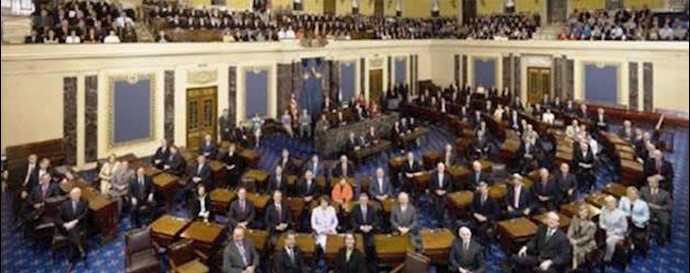
Washington – The Hill – April 05, 2015 – Senate Republicans on Sunday pressed their demand that the U.S. Congress be allowed to vote on a nuclear agreement with Iran, but they signaled they are willing to wait for last week’s interim agreement to be made final before passing judgment.
“Look, the president needs to sell this to the American people, and Congress needs to be involved,” said Sen. Bob Corker, chairman of the Senate Foreign Relations Committee.
Corker did not condemn the framework deal reached by Iran and major powers in Switzerland on Thursday after months of negotiations, but he cited concerns over inspection provisions and differing accounts from Washington and Tehran over what was actually agreed.
The Tennessee Republican said his committee will go ahead with a planned April 14 vote on legislation requiring President Barack Obama to submit a final nuclear agreement to Congress for review and approval. The deal reached last Thursday is supposed to be the framework for a final agreement to be struck by the end of June.
The bill, supported by both Republicans and many Democrats, would prohibit Obama from suspending sanctions on Iran during a 60-day congressional review. In that period, Congress could approve or disapprove the agreement, or take no action.
Corker told “Fox News Sunday” that he had backing from key Democrats for the bill, including New York Sen. Chuck Schumer, a prominent Jewish lawmaker who is in line to be the new Senate Democratic leader in early 2017. Israel has been strongly critical of the nuclear deal.
With Republicans mostly united on the issue, and some, including potential 2016 presidential candidates, fiercely condemning the deal, the key role likely will be played by lawmakers from Obama’s Democratic Party.
While many Democrats are skeptical of Iran, they may be unwilling to hand the U.S. president a major foreign policy defeat.
Both Corker and Sen. Lindsey Graham, a South Carolina Republican, previewed another possible Republican strategy.
If the final agreement with Iran is flawed, they argued, it would be better to keep in place an initial interim deal reached with Iran in November 2013, which contains limits on Tehran’s ability to enrich uranium that could be used for a nuclear weapon. All sides believe that is being observed.
“That’s one way of looking at this program — keeping the interim deal in place that’s been fairly successful and have a new crack at it with a new president,” Graham said on CBS’ “Face the Nation” program.
Even if this strategy were adopted by the United States, however, it was unclear how it would play with the five other powers engaged in the negotiations with Iran — Britain, China, France, Germany and Russia.