Many of the most prominent retired U.S. military officers are opting against expressing any firm public endorsement of or opposition to the controversial Iran nuclear deal.
“I have not yet taken a position,” retired Army Gen. David Petraeus said in a recent interview.
“I recognize the benefits, significant benefits in rolling back the Iranian nuclear program for a 10- to 15-year period,” said Petraeus, the former commanding general of the U.S. war in Iraq who later also oversaw U.S. military strategy across the Middle East as the head of U.S. Central Command.
“But I also recognize that these have to be weighed against the downsides of an agreement in terms of traditional resources going to [Iran’s] proxy elements that are causing problems in the region and beyond,” Petraeus said.
As the debate about the Iranian nuclear deal grows increasingly politicized, partisan advocates are eager to seize on any strong views from respected military officers.
The deal struck in July between Iran and the U.S. and other Western countries is a 159-page document that would essentially limit Iran’s ability to develop a nuclear weapon in exchange for lifting the financial and oil sanctions that have constrained the Iranian economy.
Congress will vote in September to potentially block President Obama’s authority to lift the sanctions, which would effectively kill the long-sought deal. For now Obama appears to have enough support to weather the stiff opposition and retain the authority to execute the deal. But as many Republicans and some Democrats line up to oppose him, the outcome is uncertain.
The White House touted an Aug. 11 letter from three dozen retired generals and admirals offering firm support for the deal and urging Congress not to kill it.
The letter’s signatories include retired Marine Corps Gen. James “Hoss” Cartwright, who oversaw the Pentagon’s nuclear force as head of U.S. Strategic Command, and retired Marine Corps Gen. Joseph Hoar, who headed CENTCOM from 1991 to 1994.
Yet many national security watchers noted numerous names missing from that list, including Marine Corps Gen. James Jones, who served as Obama’s national security adviser during his first term.
In fact, none of the CENTCOM chiefs or Joint Staff chairmen from the past 20 years signed the letter.
“I noticed that very few of them are the most senior people,” said Prof. Richard Kohn, who teaches military history at the University of North Carolina at Chapel Hill.
Letters like the one signed by the 36 generals and admirals can “give the impression to many people who are not well-informed about the military profession that they are speaking for a large number of retired military or for the military itself. It looks like a military intervention in politics.”
Very few retired military officers have publicly opposed the nuclear deal. Army Lt. Gen. Mike Flynn has criticized it. And a newly created group called Veterans against the Deal is distributing a video highlighting Iran’s link to hundreds of catastrophic attacks on U.S. troops in Iraq. The new agreement could empower the anti-American regime, they say.
The Obama administration’s handling of its Iran policy was reportedly a source of tension between the White House and former CENTCOM Commander Marine Corps Gen. James Mattis. For years he expressed hawkish views about Iran.
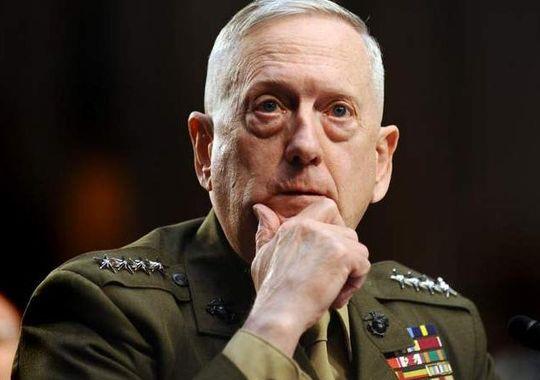
Retired Marine Gen. James Mattis declined a Military Times request to talk about the Iran nuclear deal
Retired Marine Gen. Anthony Zinni, a former CENTCOM commander, recently suggested a similar wait-and-see approach.
“The agreement cannot be judged as good or bad on its own,” said Zinni in an interview with the Virginia Gazette newspaper. “Like all agreements, the judgment will come based on how it is implemented. The quality of the inspections and verification will be key as will Iran’s degree of cooperation. If Iran cooperates and begins to agree to open talks on other issues, the agreement will have been a success.”
Some retired officers are offering views behind closed doors in an effort to aid policymakers facing a complex issue.
Petraeus has worked closely with the Washington Institute for Near East Policy and its Iran Study Group, a team of former top government officials who helped examine and clarify the technical details of the legal agreement.
He said the Obama “administration has engaged us and has addressed some of the reservations that we have expressed. And that dialogue is continuing.”
Petraeus said he was reassured by one aspect of the deal that clarifies nuclear-related sanctions will be lifted on Iran, but those sanctions imposed for terrorist activity, specifically targeting Qassem Suleimani, the notorious commander of the Iranian Revolutionary Guard’s Quds force, can remain intact.
Nevertheless, Petraeus said, “There should be no question that some of the $100 billion, $150 billion in assets that Iran will receive — currently frozen assets — when the sanctions are lifted, some of that will go to the Iranian Revolutionary Guard Quds Force and undoubtedly to Iranian-supported elements such as Lebanese Hezbollah, various Shia militias in Iraq, the Houthi forces in Yemen, and Bashar al-Asad’s regime in Syria, and possibly Hamas.”
“The single biggest issue really is assurance, assurance that Iran will not be allowed to enrich new weapons-grade uranium.