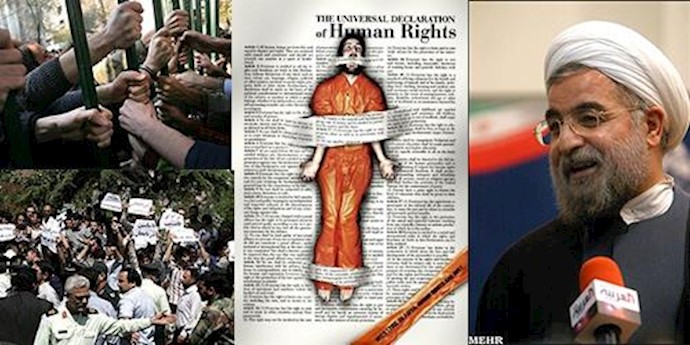
Digital Journal – Jan. 29, 2016 – Iranian President Hassan Rouhani has been visiting Europe this week as Iran reintegrates itself with the global economy. Are Iran’s intentions genuine or could something else be at play?
Hassan Rouhani’s tour of Europe after international sanctions lifted is causing a concern amongst critics of being sincere of both Rouhani and the theocracy that rules Iran. The question is whether Iran really becoming more moderate, or is the government merely trying to ward off international pressure that it can further entrench itself?
Maryam Rajavi, the president-elect of the National Council of Resistance of Iran, the leading Iranian dissident group, denounced Rouhani and his visit. “As a cleric, Hassan Rouhani is a defender of the ruling theocracy and has sworn allegiance to the velayat-e faqih (absolute rule of the clergy). As one the most senior officials of the religious fascism ruling Iran throughout the past 37 years, he has been involved in all its atrocities and as such he should face justice for crimes against humanity,” she said.
A major rally by thousands of Iranian expatriates in Paris denounced the red carpet roll out for him.
Even if one grants Rouhani the status of being a “moderate” within the regime, it’s hard to white wash members of his entourage. Hamid Aboutalebi, Rouhani’s Office political deputy, was appointed Iran’s ambassador to the U.N. back in 2014, but was denied a visa by the United States owing to his role in the U.S. Embassy occupation in 1979 and involvement in the assassination of a NCRI official in 1993.
Mullah Hesam-ad-Din Ashena, currently in charge of the President’s Center for Strategic Studies, previously specialized in repressing and persecuting dissident clerics. Numerous other members of Rouhani’s circle of close advisers hail from the infamous Revolutionary Guard and Intelligence ministry. Both apparatuses have been accused of fomenting instability in Iraq and supporting radical Shia militias and politicians.
Is Iran’s “Change” Real?
It’s hard to forget that Iran is a country where young adults can be arrested and threatened with being lashed for recording innocuous YouTube videos of themselves dancing. Further, as far as executions go Iran is second to China, though it’s worth noting that China’s population is over ten times as large. In Fact, Iran is leading per capita executioners of its own citizens, including juveniles.
Meanwhile, just a few weeks ago American sailors were held at gunpoint after drifting into Iranian waters following an engine failure. Iran could have offered assistance, or towed the sailors back to international waters, but instead forced them onto their knees, and all but made them beg for forgiveness.
Iran also decided to start the New Year with yet another embassy siege. Mobs of Iranians stormed the Saudi embassy after an Iranian was beheaded in Saudi Arabia. Some have accused the Iranian government of organizing the attack. At the very least, the Iranian government was stoking the flames that led to the protests. And while Iranians may have grievances with Saudi Arabia, storming embassies isn’t exactly a solution.
Within these contexts it’s hard to view Rouhani as a serious reformer. Arguably, the tepid reforms he has pushed for, such as a temporary halt to Iran’s nuclear ambitions (again, at least publicly) will likely serve to only further entrench the extremist theocracy that rules Iran.
As Maryam Rajavi puts it “His claim to moderation is a big lie meant to attract the West’s assistance in pursuing his mandate to save the crisis-riddled regime, which the overwhelming majority of Iranians seek to overthrow. Yet, he is unwilling and incapable of distancing himself, in practice or in words, from the wave of executions in Iran and Bashar al-Assad’s massacre of the Syrian people.”
By Brian Booker