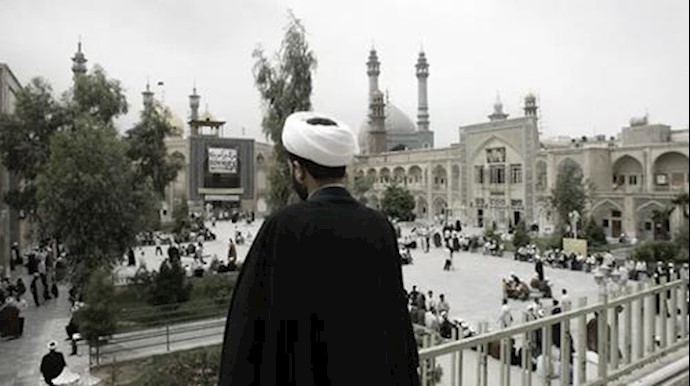
Clerics once adept at bringing out the vote struggle to rally support for hardliners
Financial Times, May 12, 2017 – Ever since Iran’s 1979 revolution, clerics from the holy city of Qom — home to the biggest seminary in the Shia world — have been dispatched across the country to encourage people to vote.
Nearly 40 years ago, these preachers, recognized by their turbans and flowing robes, were widely credited with helping to secure support for the new Islamic republic in a referendum.
As campaigning intensifies before next week’s presidential poll, the conservative establishment is hoping they will be able to rally support around hardline candidates such as Ebrahim Raisi, a cleric and the custodian of Iran’s holiest shrine in the northeastern city of Mashhad, and Mohammad Baqer Qalibaf, the mayor of Tehran. But in a sign of how much has changed in recent years in Iran — which under centrist President Hassan Rouhani signed a nuclear deal with world powers — it is unclear how much power these clerics still wield.
Iran’s political and military elite still derive their religious legitimacy from the Qom-based clergy, which, with around two dozen grand ayatollahs and 80,000 students, has almost half of the country’s clerics.
But the seminary, once backed by wealthy businessmen in the traditional bazaar, has become reliant on the state budget and subject to government interference. Clerics there are struggling to come to terms with a changing society and reluctant to embrace the new technology that might give them a wider audience. Increasingly, the seminarians at Qom fear that their sphere of influence is shrinking.
“The clergy’s influence has declined in recent decades because clerics have not responded to modern needs fast enough,” says Hossein Mousavi Tabrizi, a well-known teacher at the Qom seminary.
He was responsible for sending thousands of student clerics out to encourage a high turnout for the post-revolution referendum.
“Now, young clerics have influence in poor rural areas where people’s education and access to information is low,” the 70-year-old black-turbaned cleric adds. “But people in big cities, notably women who have modern social roles, are politically conscious and, at best, would listen to renowned clerics.”
Leading clerical groups close to hardliners have officially thrown their support behind Mr Raisi. In recent days, he was welcomed by thousands of supporters in Qom who liken him to the son of Fatima, the daughter of the Prophet Mohammed. Many of Mr Raisi’s supporters belong to the Basij, voluntary forces affiliated with the elite Revolutionary Guard. Senior conservative clerics and the guards have criticized Mr Rouhani for Iran’s economic performance in the wake of the nuclear accord.
While the clergy welcomed the deal, they are anxious for the weak economy, which has influenced how much money people can donate to clerics. Iran is struggling with poverty and youth unemployment at about 26 per cent. It is unclear how much the alignment of interests by the hardline clergy and the guards will sway the vote. The latest unofficial opinion polls show Mr Rouhani is ahead as he seeks to secure a second term.
Ultimately, reform-minded clerics say change is needed if they are to maintain their position within Iranian society. But within the seminary, they say, there has been a silencing of debate.
Financial and political reliance on the state and crackdowns have curbed their independence. With the Revolutionary Guard establishing bases in most mosques, the clergy are no longer seen as autonomous. “Since . . . the clerical institution has become affiliated to power centers, it has less influence,” says one cleric.
“Preaching is still done in the very traditional ways by physical presence without much use of technology in mosques — and not in cinemas and sports stadiums where the youth go,” says Mohsen Mohajernia, head of the Scientific Associations Centre, affiliated to the Qom seminary.
Iranian elections are becoming characterized by what the clerics see as immoral behavior, such as mudslinging. “Clerics are now very upset with the US-style presidential campaigns, for instance, but they don’t have the means — like an independent television channel — and ideas to offer a new Islamic-Iranian model,” he adds.
And as the Qom clerics adhere to tradition, the maddahi, non-clerical religious songs, have become even more popular. Politicized and religious, these songs are set to techno music. Many maddahi singers now back Mr Raisi and Mr Qalibaf. While the maddahi were initially seen vital to reinforcing the status quo, their prevalence has also contributed to a “dumbing down” of religious instruction, says Mohammad Taghi Fazel Meibodi, a reform-minded cleric.
If the clergy want to extend their reach beyond the poor and devout, they should enact reforms and keep pace with modern developments, clerics say.
In some cases too, they need to clean up their act. Some clerics have become businessmen, said Mr Tabrizi. “In public eyes, we are the accused.”