
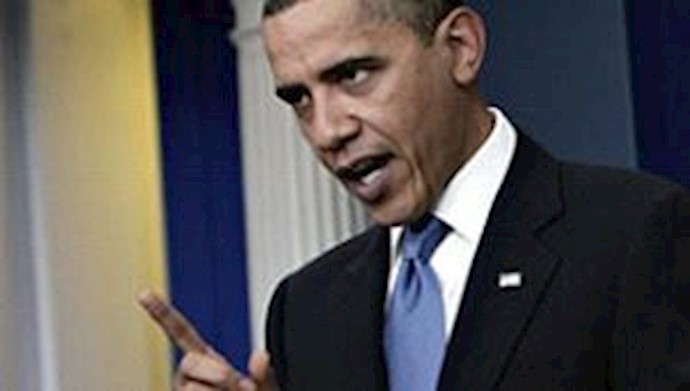
The Wall Street Journal, Washington, 3 March 2012 – President Barack Obama declared he won’t accept a nuclear weapon in Iran and insisted, ‘I don’t bluff,’ setting a new tone more in tune with Israel’s approach of aggressively trying to discourage Tehran’s nuclear ambitions.
The shift comes just before a meeting here Monday with Israeli Prime Minister Benjamin Netanyahu where the two leaders will try to bridge their own differences and forge a unified Iran strategy.
On Message Dueling statements on Iran
‘We will witness Israel being wiped off the map.’
Iranian Brig. Gen Masoud Jazayeri on the response if Israel attacks, Nov. 10
‘The intelligence doesn’t show that they’ve made the decision to proceed with developing a nuclear weapon. That is the red line that would concern us.’
U.S. Defense Secretary Leon Panetta, Feb. 16
‘We are of the opinion that the Iranian regime is a rational actor. And it’s for that reason I think that we think the current path we’re on is the most prudent path at this point.’
Joint Chiefs of Staff Chairman Gen. Martin Dempsey, Feb. 19
‘I think that the Israeli government recognizes that, as president of the United States, I don’t bluff.’
President Obama, to Atlantic magazine, March 2
‘Iran could exploit talks, as they have done in the past, to deceive and to delay so that they can continue to advance their nuclear program and get to the nuclear finish line by running up the clock. The international community should not fall into this trap.’
Israeli Prime Minister Benjamin Netanyahu, in Ottawa, March 2
Mr. Obama’s message has two aims, White House officials said: to increase pressure on Tehran by highlighting the potential for military action; and to lessen the chance that Mr. Netanyahu will unilaterally initiate a military strike against Iran this year.
Mr. Netanyahu has conveyed to the White House that he will press Mr. Obama on Monday to lay out what ‘red lines’ Tehran must not cross and for the president to publicly clarify his position that all options are on the table to confront Iran, administration officials said.
The president’s statements also come just before the annual conference of Washington’s most powerful pro-Israel lobby, the American Israel Public Affairs Committee, or AIPAC, where Mr. Obama will speak Sunday, followed by Mr. Netanyahu on Monday.
Then Republican presidential candidates Mitt Romney, Rick and Newt Gingrich will address AIPAC on Tuesday; all three have made a tougher stance against Iran’s nuclear ambitions their principal point of departure from the president’s national-security record.
More Iran Tries for ‘Democratic Energy’ The White House, recalibrating, now plans to address Mr. Netanyahu’s concerns in Mr. Obama’s Santorum AIPAC speech, U.S. officials said.
The Wall Street Journal reported on Tuesday that the White House was considering using the
AIPAC speech to set a more forceful tone on potential of military action.
The venue gives Mr. Obama an opportunity as well to repair relations with Jewish voters that have been strained by tensions between his administration and Mr. Netanyahu’s government.
Mr. Netanyahu and other Israeli officials have privately complained to U.S. officials and lawmakers in recent weeks that the U.S. message on Iran is too vague and has undermined Israel’s attempts to use the threat of force to deter Tehran’s nuclear advances.
But Mr. Obama faces another political quandary. Tensions with Iran already are driving up oil prices, and the president’s advisers warn that a confrontation with Iran could throw off the economic recovery so crucial to his re-election.
The meeting with Israel comes as world powers next week are expected to accept an Iranian offer to resume negotiations aimed at curbing its nuclear program, according to European officials.
The West believes Tehran is seeking to acquire atomic weapons, a charge Iran denies.
Iran has responded to growing pressure from international sanctions by warning it would block oil shipments by sea from the Persian Gulf, while also reporting progress in its ability to enrich nuclear fuel.
Mr. Obama plans on Sunday to strike a balance between a sharper message to reassure the Israelis that he would use force if necessary, and the need to avoid explicit detail about red lines or U.S. military planning.
White House officials said the president previewed his speech in an interview released Friday.
‘I think it’s fair to say that [in] the last three years, I’ve shown myself pretty clearly willing, when I believe it is in the core national interest of the United States, to direct military actions, even when they entail enormous risks,’ Mr. Obama told The Atlantic magazine in an interview made public on Friday.
At the same time, Mr. Obama said it wouldn’t be smart policy to publicly specify Washington’s red lines. ‘But I think both the Iranian and the Israeli governments recognize that when the United States says it is unacceptable for Iran to have a nuclear weapon, we mean what we say,’ he said.
Administration officials said they believe there will be plenty of rhetoric in Mr. Obama’s AIPAC speech that will please Mr. Netanyahu and Jewish-American voters and create a more congenial atmosphere when the two leaders meet Monday.
Mr. Obama hopes to change his personal dynamic with Mr. Netanyahu, which has been badly strained over the past three years over issues including the Mideast peace process and nuclear disarmament, U.S. officials said.
Mr. Obama is also making clear the U.S. view that there is still time to diplomatically resolve tensions with Iran.
The U.S. and Israel have struggled to find a common position on Iran’s nuclear program because of differences over time lines, red lines and the utility of diplomacy.
Mr. Netanyahu has regularly stated that Iran must be denied any nuclear capability, and Israel has cited shorter time frames than Washington for when it believes Tehran could have a nuclear weapon.
Current and former U.S. officials said this week that they didn’t expect Mr. Netanyahu to ask Mr. Obama for any specific guarantees on when the U.S. might strike Iran. To do so, they said, could also handcuff the Israeli leader, who has repeatedly stated that Israel must maintain its own independence in deciding if and when to strike.
Instead, officials said the two leaders will likely work to more clearly define what the two sides see as the time line for when Iran could have a nuclear bomb and the actions that might be used to prevent this.
They also said Mr. Netanyahu is likely to press Mr. Obama about the course of any diplomatic track with Iran, to ensure Tehran doesn’t stall while continuing to advance its nuclear program.
‘I think it’s much more of a strategic discussion and one looking at the time line for the talks,’ said Dennis Ross, who was Mr. Obama’s top Mideast adviser until December.
‘They’re worried about being in a situation where things stretch out and where they really could lose their option to act against Iran.’
European officials are in advanced discussions with Iran aimed at resuming negotiations over the nuclear program.
A decision on timing and location of these talks could be announced by the European Union’s foreign-policy chief, Catherine Ashton, next week, officials said.
On Friday, Mr. Netanyahu cautioned Western leaders not to be deceived by the prospect of diplomatic talks with Tehran.