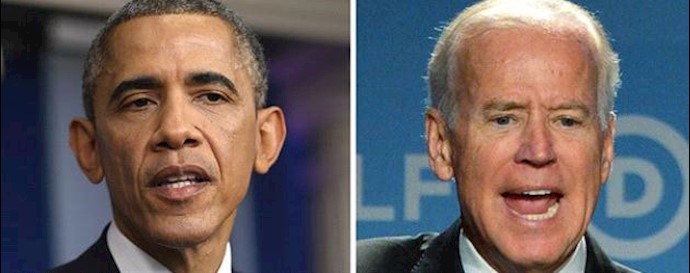
The Obama administration has launched an aggressive sales pitch aimed at convincing Congress to hold its fire on Iran in the wake of a framework nuclear agreement.
President Obama, Vice President Biden, White House Chief of Staff Denis McDonough, “and a whole host of other White House and senior administration officials” have been making calls to lawmakers, White House spokesman Eric Schultz said Friday.
The administration wants lawmakers to suspend legislation related to Iran until after June 30, the deadline for negotiators to finalize a deal on Iran’s nuclear program.
Deputy Secretary of State Tony Blinken made the media rounds Friday, telling CNN that the president wants “to move out aggressively” to work Congress and ensure lawmakers have “all the details” of the framework.
“The president has instructed us to move out aggressively to work with Congress in the weeks ahead,” he said during an interview CNN. “To show them all of the details, to give them a chance to digest the details, and then to move forward with Congress.”
Though Obama has repeatedly threatened to veto any legislation that reaches his desk before the mid-year deadline, administration officials have also indicated they want to work with lawmakers to ensure they have input in the process.
Schultz said Blinken, National Security Advisor Susan Rice and Treasury Secretary Jack Lew are also taking part in the outreach campaign.
The president has plenty of lawmakers to convince. Highlighting the tough sell facing the administration, a number of senior House Democrats are voicing strong reservations that the framework simply doesn’t go far enough to ensure that Iran’s nuclear-weapons capabilities are eradicated.
Reps. Steve Israel (D-N.Y.), a member of leadership, Nita Lowey (D-N.Y.), the party’s top appropriator, and Ted Deutch (D-Fla.), the ranking member of the Foreign Affairs Committee’s subpanel on the Middle East, are all expressing doubts that deal will meet its goals.
“Until the full details are provided to Congress on June 30th, you can keep me in the ’highly skeptical’ column,” Israel said Thursday in a brief statement.
Rep. Alan Grayson, a liberal member of the House Foreign Affairs panel, is also dubious. Emphasizing that many details remain to be hammered out, the Florida Democrat said the framework falls short of the administration’s ultimate objective: to ensure the end of Iran’s nuclear-weapons ambitions in return for relinquished sanctions.
“From what I see, that deal is not this deal,” Grayson said Friday in a phone interview. “[It’s] a classic example of, let’s kick the can down the road.”
Resistance from Democrats would be a setback to the president, who has pushed hard against tough opposition for an Iranian deal he sees as, potentially, the crowning foreign-policy achievement of his second term.
Republican leaders are vowing to move quickly this month on legislation granting Congress a stronger hand in finalizing any deal, including proposals for tougher sanctions that Obama says will undercut diplomacy.
While Blinken said he had a “great conversation” with Sen. Bob Corker, the Foreign Relations Committee chairman, after the agreement was announced, the Tennessee Republican said the committee is still expected to vote later this month on his legislation allowing lawmakers to weigh in on a deal.
Senate hawks also remain highly skeptical of the negotiations. Sen. Marco Rubio (R-Fla.), a likely 2016 presidential candidate, said he is concerned Thursday’s announcement “will have devastating consequences for nuclear non-proliferation, the security of our allies and partners, and for U.S. interests in the region.”
But Republicans will need to win over some Democratic support in both chambers to pass their Iran bills with veto-proof majorities.
Among the chief concerns of Rep. Brad Sherman (D-Calif.) is the fact that, while Iran foreign minister Mohammad Javad Zarif has supported the European Union’s statement on the deal, he has yet to publicly endorse the more detailed four-page framework released by the administration.
“So I’ve got to worry, ’Is this the agreement or is this the congressional pacification document?’” Sherman said by phone. “These four pages are much better than a lot of us were anticipating, although the one thing that’s missing are Zarif’s initials.”