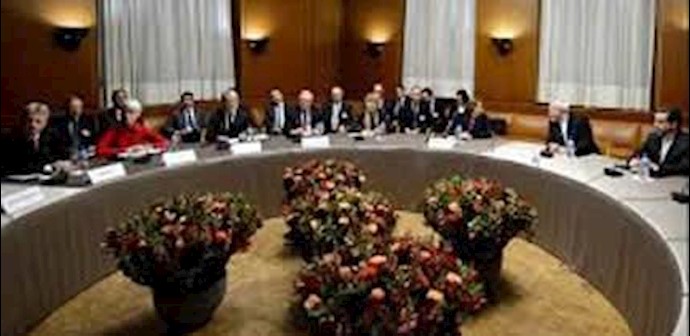
After several weeks of unexpectedly hard and often tetchy bargaining, six world powers and Iran reached an agreement on January 12th that sets out the details of a “joint plan of action” (JPA) to freeze Iran’s nuclear program for six months. The implementation of the JPA, originally negotiated in November, will begin on January 20th. Verification that Iran is sticking to its side of the interim deal will come from the UN’s nuclear watchdog, the International Atomic Energy Agency (IAEA) through stepped-up inspections and monitoring. In return, Iran will begin to receive, in monthly installments, some $4.2 billion in seized assets held in Western banks; some minor financial sanctions will also be suspended. However, the clock is now ticking on efforts to achieve a comprehensive long-term pact. Even supporters of the interim deal rate the chances of success as low.
Though hailed as an historic breakthrough by some and a terrible blunder by others, the November deal may be best seen as a six-month truce to buy time. Gary Samore, who was Barack Obama’s adviser on arms control until last year and is now at Harvard’s Belfer Centre, points out that neither side has given away any of its big bargaining chips.
That is not surprising, given the degree of mutual mistrust.
Obama says that “Iran must accept strict limitations on its nuclear program that make it impossible to develop a nuclear weapon”. In truth, no agreement can permanently remove Iran’s ability to get a bomb if it really wants one; infrastructure can be hamstrung, but technical knowledge cannot be eradicated.
To that end, while accepting that Iran should be allowed to keep some uranium-enrichment capability (a concession too far, according to many critics), America will insist that Iran reduces its centrifuges from its current 19,000 to fewer than 5,000. Among America’s other conditions for a comprehensive deal are the closure of the supposedly impregnable underground enrichment facility at Fordow; the dismantling of the heavy-water nuclear reactor at Arak; a satisfactory account by Iran of all its past “weaponisation” activities; and an inspection regime even more rigorous than required by Iran’s signature of the IAEA’s “additional protocol”.
By contrast, Rouhani has promised that none of Iran’s existing nuclear facilities will be destroyed; that Arak (which, once online, gives Iran an alternative plutonium path to a bomb) will be kept only to supply medical isotopes; and that Iran has the right to what he calls “industrial-scale” enrichment, which could mean at least 50,000 centrifuges. It is thought that he envisages a deal that freezes the program for three years, after which, having shown good faith and signed the additional protocol, Iran would be allowed to expand enrichment to an industrial scale.
Mr. Samore says that concentrating only on limiting Iran’s breakout capability is a bit of a red herring. The real issue, he says, is that if Iran has a big enough nuclear infrastructure, it might be able to siphon off people and material into secret facilities. These might produce a small arsenal of nuclear devices before Iran felt the need to announce a test, by which time it would be too late to do anything about it.
The volume and vulnerability of global nuclear stockpiles
Mark Fitzpatrick, a specialist on weapons proliferation and nuclear security at the International Institute for Strategic Studies in London, fears that the present gap between the two sides and the strength of the constituencies who believe nothing good can come from negotiating with the devil will make a long-term deal “well-nigh impossible”. Mr. Samore thinks that as long as Khamenei is supreme leader, Iran will not give up its option to acquire nuclear weapons.