Republicans forcefully challenged President Barack Obama’s nuclear deal with Iran on Wednesday as the White House dispatched a Cabinet-level lobbying team to build support for the agreement to ease sanctions in exchange for concessions on the Islamic nation’s nuclear program.
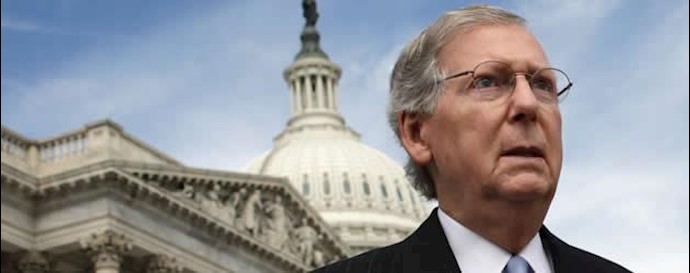
“No serious person truly believes” that the United States faces a choice between implementing the agreement and going to war with Iran, said Senate Majority Leader Mitch McConnell, R-Ky., rebutting statements from Obama and Secretary of State John Kerry.
Several other Republicans found fault with the deal in remarks on the Senate floor, including Sen. John Cornyn of Texas, who said there was a third option available. He noted the deal did not require the dismantling of Tehran’s nuclear infrastructure, and said, “There are tougher sanctions that will bring Iran to the table for a better deal and a good deal.”
Republicans charged that Congress has not received documents concerning an alleged side deal between Iran and the International Atomic Energy Agency.
In a statement issued Monday, Sen. Tom Cotton, R-Ark., and Mike Pompeo, R-Kan., said that in a recent meeting with IAEA officials, they had been told that two side deals “will remain secret, and will not be shared with other nations, with Congress or with the public.” One deals with inspection of Iran’s Parchin military complex, they said, and the other deals with resolving disputes over “possible military dimensions of Iran’s nuclear program.”
In the days since the agreement was announced, some Republicans have announced their opposition while others said they would await briefings and other information they receive from the administration.
There is little suspense about how they will come down, though.
House Speaker John Boehner, R-Ohio, promised tough questions from lawmakers at the sessions. “A bad deal threatens the security of the American people — and we’re going to do everything possible to stop it,” he told reporters.
House Majority Leader Kevin McCarthy, R-Calif., released a list of 21 reasons to oppose the deal, including: “The murderous Syrian President Bashar al-Assad called this deal a ‘great victory’ and congratulated Iran on their achievement.”
In his remarks, McConnell said the burden of proof is on the administration to explain the deal, and “it seems the administration today has a long way to go with Democrats and Republicans alike.”
He said, “Is this deal really about keeping America, the region, and the world safer, or is it simply a compendium of whatever Iran will allow — an agreement struck to temporarily take a difficult strategic threat off the table, but one that might actually empower the Iranian regime and make war more likely?” McConnell asked at the start of the Senate session.
AP, Washington, 22 July 2015