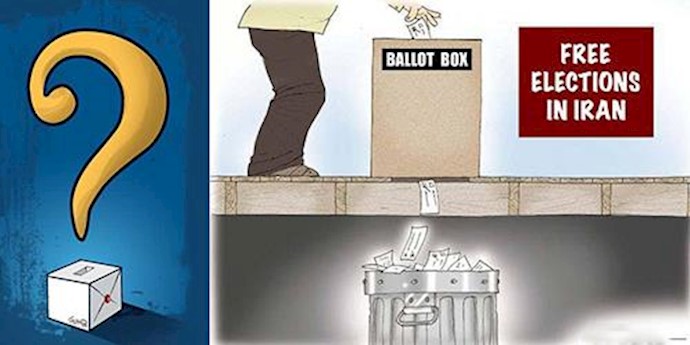

ANKARA — Many Iranian women and young people are disillusioned about the upcoming elections, desperate for reform but losing hope in the president and his promise of a freer society.
The Feb. 26 parliamentary poll will see pro-reform candidates, who broadly back President Hassan Rouhani, attempt to overturn the majority held by conservative hardliners in the 290-seat assembly. It will be a test of public support for Rouhani himself ahead of presidential elections next year.
While the vote might not have an influence on foreign policy, which is determined by Iran’s Supreme Leader, the election of a reformist parliament could strengthen Rouhani’s hand to push through economic reforms to open up the country to foreign trade and investment.
Rouhani won the presidency in 2013, bolstered by the support of many women and young people who were encouraged by his comments that Iranians deserved to live in free country and have the rights enjoyed by other people around the world.
“I am not going to make the same mistake twice. I have decided not to vote,” said Setareh, a university graduate in the northern city of Rasht. “I voted for Rouhani – was he able to improve my situation? No.”
Rouhani’s supporters hoped that his election victory would lead to social change in country where women have lesser rights than men in areas including inheritance, divorce and child custody and are subject to travel and dress restrictions, and strict Islamic law is enforced by a “morality police”.
But rights campaigners say there has been little, if any, moves to bring about greater political and cultural freedoms as the president has focused on striking the nuclear accord with world powers.
Iran rejects any allegations it is discriminating against women, saying it follows Sharia law.
Now Rouhani and his allies are struggling to mobilize two of their main support bases – women and young people.
The president’s promises to loosen Internet restrictions have not been met. Access to social media remains officially blocked, though Rouhani and Khamenei have their own Twitter accounts.
This has been a particular grievance among those under 30, who represent more than two-thirds of the 78 million population and were born after the 1979 Islamic revolution that toppled the U.S.-backed Shah.
“I am not going to vote. What is the use of voting? My hopes are shattered,” said a 27-year-old engineer in Tehran, who refused to give his name.
HIGHLY EDUCATED
The president’s constitutional powers are limited, with ultimate authority in the hands of Khamenei.
The Feb. 26 elections will also see the public vote for members of the Assembly of Experts, a clerical body that could play a pivotal part in determining Iran’s future path in both domestic and foreign policies – as at some point it will have the job of selecting a successor to 76-year-old Khamenei.
Iranian women, who make up more than half of the population, are among the most highly educated in the Middle East; they have a literacy rate of over 80 percent and account for over 50 percent of university entrees.
But under Iranian law, men can divorce their spouses far more easily than women, while custody of children over seven automatically goes to the father.
Women have to get permission from their husbands to travel abroad. They are obliged to cover their hair and the shape of their bodies, their testimony as a legal witness is worth half that of a man, and daughters inherit half of what sons do.
“What will change if I vote?” said Miriam, 26, who could not win custody of her eight-year-old son after getting divorced in the central city of Isfahan. “Can reformist candidates give me equal rights?”
A report by the U.N. special rapporteur on Iran last year said human rights in the country “remained dire” under Rouhani, while separately a U.N. child rights watchdog said this month that girls faced discriminatory treatment “in family relations, criminal justice system, and property rights”.
“Rouhani by no means is a political opposition figure to the clerical establishment,” said a senior Western diplomat in Tehran.
“No matter which political faction wins the majority in the parliament. The ultimate power will remain in the hands of Mr. Khamenei.”