The Wall Street Journal, 26 July 2015
An Obama administration assessment of the Iran nuclear deal provided to Congress has led a number of lawmakers to conclude the U.S. and world powers will never get to the bottom of the country’s alleged efforts to build an atomic weapon, and that Tehran won’t be pressed to fully explain its past.
In a report to Capitol Hill last week, the administration said it was unlikely Iran would admit to having pursued a covert nuclear weapons program.
Details of the report, which haven’t been previously disclosed, indicate the deal reached this month could go ahead even if United Nations inspectors never ascertain conclusively whether Iran pursued a nuclear weapons program—something Tehran has repeatedly denied.
The issue of Iran accounting for its alleged past work has emerged as a flash point in the debate between Congress and the White House over the July 14 agreement. Lawmakers initiated a two-month review of the accord last week, and many have demanded answers about Iran’s nuclear weapons history.
Under the deal, Tehran is required by mid-October to give U.N. inspectors access to Iranian scientists, military sites and documents allegedly tied to a covert nuclear-weapons program to have international sanctions repealed. Iran has balked at such requirements in the past.
U.S. lawmakers and outside nuclear experts are skeptical the U.N. nuclear watchdog, the International Atomic Energy Agency, will be able to conclusively determine in two months an investigation it has failed to resolve in more than a decade.
The IAEA is required to publish a report by year-end on Iran’s alleged past military work as part of the deal.
A secret agreement between the IAEA and Tehran spells out how the U.N. agency will complete the probe. But U.S. lawmakers have bristled in recent days over the confidentiality.
Some senators complained last week that they were told by administration officials that Iran would be allowed to manage some of the IAEA’s investigation. They said they were told Tehran would conduct its own soil sampling at a military site called Parchin, where, allegedly, explosive devices were tested.
“We’re going to trust Iran to do their own testing? This is absolutely ludicrous,” Sen. James Risch (R., Idaho) told Obama administration officials at a congressional hearing last week.
Sen. Robert Menendez (D., N.J.) said: “Chain of custody means nothing if, at the very beginning, what you’re given is chosen and derived by the perpetrator. If that is true, it would be the equivalent of the fox guarding the chicken coop.”
The Obama administration presented its assessment to lawmakers July 19 in a package of documents required by Congress to help vet the Iran accord.
The documents included classified and unclassified sections on the verification process that will be used to ensure Iran is abiding by the agreement. The package also includes a section on Iran’s future nuclear research and development plans.
On Iran’s alleged past weapons work, the Obama administration said it concluded: “An Iranian admission of its past nuclear weapons program is unlikely and is not necessary for purposes of verifying…commitments going forward,” said a copy of the assessment viewed by The Wall Street Journal.
Iran and the IAEA, which have been in a decade long standoff over Tehran’s suspected arms work, forged an agreement this month to address the weaponization issue. It included demands that Tehran provide access to sites, scientists and documents it repeatedly refused to allow in the past.
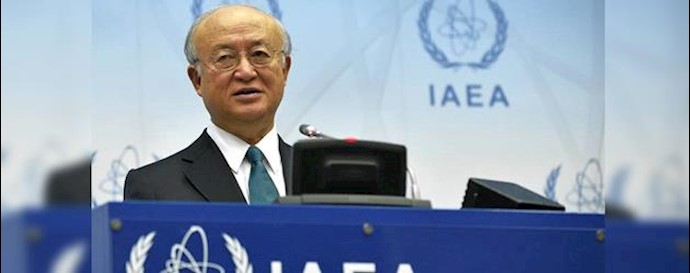
This makes IAEA Director General Yukiya Amano something of a wild card in the Obama administration’s efforts to formalize the Iran deal and gain congressional approval by year-end, diplomats and nuclear experts said.
U.S. and IAEA officials have said the process will be credible and that sanctions on Tehran won’t be lifted if the country doesn’t cooperate in the probe. But outside analysts said the political pressure on Mr. Amano and the IAEA to resolve the weaponization issue was immense, given that the broader Iran deal is contingent on how it is addressed.
Outside nuclear experts said understanding Iran’s past nuclear work was critical to verifying the new agreement because it establishes a baseline for what Tehran has done in the past.
Former U.S. intelligence officials have questioned White House claims that it already knows enough about Iran’s overall program to ensure the Vienna agreement is properly verified.
They said the U.S. and IAEA initially failed to detect major advances in Iran’s nuclear program, such as the construction of a uranium enrichment facility in the city of Natanz and a heavy water reactor in Arak.
“We, of course, do not have total knowledge of how much progress the Iranians had made,” the former head of the Central Intelligence Agency, retired Gen. Michael Hayden, told a recent congressional hearing. “I know of no American intelligence officer who could claim that we have absolute knowledge of the Iranian weaponization program.”