The Hill, 10 Feb. 2016– Lawmakers in both parties accused the Obama administration on Wednesday of bending — if not outright breaking — a new anti-terrorism law, and of violating the separation of powers in the process.
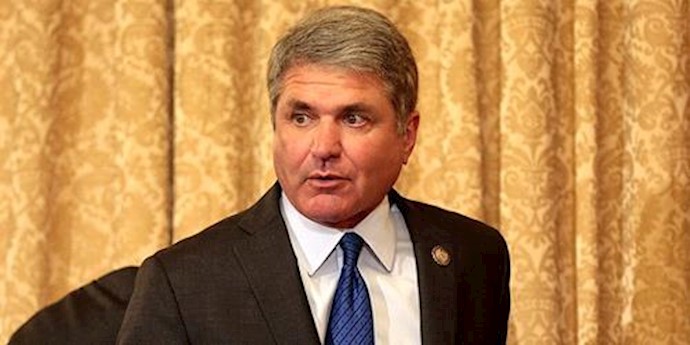
“The president has decided that he’s going to break this law,” House Homeland Security Committee Chairman Michael McCaul (R-Texas) said in one of two separate hearings with administration officials.
“This decision could have serious consequences for our security and, perhaps more importantly, far-reaching consequences for our democracy.”
The law passed by Congress last year narrows a program that allows millions of foreign travelers to enter the U.S. without a visa.
But according to Rep. Bennie Thompson (Miss.), the Homeland Security Committee’s top Democrat, the White House made a “questionable” call to publicize a list of five possible categories of people who could still travel without a visa, even though the law would have otherwise made that impossible.
The anti-terrorism law forbids people from participating in the visa waiver program if they have recently traveled to or are dual citizens of Iran, Iraq, Syria and Sudan. Those people would still be able to travel to the U.S., but would have to undergo the lengthier process of first acquiring a visa.
But when the law was being implemented last month, the Obama administration announced that it would expand a provision allowing it to waive the new visa requirement for cases “in the law enforcement or national security interests of the United States.”
The administration listed five categories of people who might be able to travel without a visa — including people who had traveled to Iran for business purposes since the finalization of the nuclear deal last summer. Republicans erupted over the move.
Days after it was passed by Congress, Iran also raised concerns. The new restrictions could threaten the recently signed international nuclear accord, Iran’s foreign ministry suggested.
In response, the Obama administration appeared to go out of its way to reassure Tehran.
“It seems to me that in our effort to … appease Iran, that State Department made a call overriding — basically breaking the law that we passed,” said McCaul.
“It sounds like we created a jobs program for Iran,” added Meadows.
While Democrats appeared to largely agree that the administration’s actions were more aggressive than they would have expected, they declined to deride it as illegal.
“I think that language is clearly within the law,” said Rep. Cedric Richmond (D-La.). “If they wanted to outlaw the waivers, then that language should be in there.
“But if it’s in there, we can’t come back and get mad that you’re using language that’s there.”
The administration is taking a “commonsense approach,” agreed Rep. Gerry Connolly (D-Va.), one of the few lawmakers to defend the administration’s moves.
President Obama “is taking advantage of a provision in the law,” Connolly added. “If we don’t like it, we can change the law.”
McCaul, in the Homeland Security Committee, hinted that action along that front might be forthcoming.
The panel will be “very strongly” pressing the administration on the issue, McCaul said, and may also be exploring the possibility of new legislation.
“There may be another action here, and that is to pass another law” with more specific language, he said.