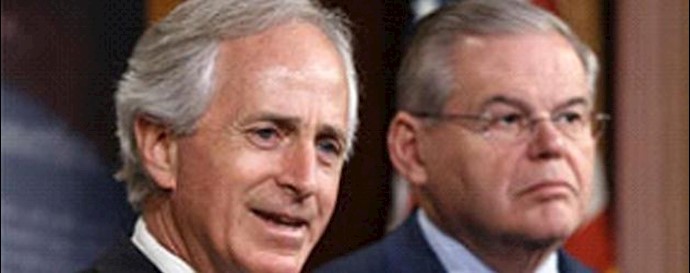
WCNC, WASHINGTON, 5 July 2015 — A $150 billion windfall Iran would get after a deal to curb its nuclear program is raising new alarms in Congress that it will use the money to boost terrorist funding across the Middle East.
Top Republican and Democratic senators propose legislation that would impose penalties on Iran if it used the money to spread mayhem.
James Clapper, Obama’s director of national intelligence, calls Iran the world’s “foremost state sponsor of terrorism,” citing Iran’s support for Hezbollah in Lebanon, Bashar Assad’s regime in Syria and Houthi insurgents in Yemen.
State Department spokesman John Kirby said Terrorism-related sanctions will remain unless Iran ends its support for terrorism.
The United States and other world powers are trying to clinch a deal with Iran by Tuesday. The pace for lifting sanctions has been one of the main sticking points.
Yukiya Amano, chief of the U.N. nuclear watchdog, the International Atomic Energy Agency, said Saturday in Vienna that Iran could resolve his organization’s questions about possible weapons work by the end of the year. “I think we can issue a report by the end of the year on the … clarification of the issues related to possible military dimensions” of Iran’s nuclear program, Amano said after returning from Tehran, according to Radio Free Europe.
Amano traveled to Iran this week to talk to President Hassan Rouhani about his nation’s past nuclear activities, suspected weapons work and gaining access to Iran’s civilian and military nuclear facilities in the future.
The White House has estimated the value of Iran’s foreign accounts frozen by nuclear sanctions at $150 billion. The lifting of other sanctions would allow Iran to boost its oil production from 2.9 million barrels a day to 4.2 million barrels a day by 2020, according to a report by Washington-based energy analyst Sara Vakhshouri of SVB Energy International. Iran’s oil production is worth about $60 billion a year on the world market. Oil prices are likely to fall in reaction to Iran’s new oil output, Vakhshouri said.
Senate Majority Leader Mitch McConnell, R-Ky., urged Obama to rethink the negotiations, arguing that Iran is expanding its ballistic missile program and supporting “terrorist proxies” that pose a threat to the United States and its allies. Giving Iran access to more cash “would only make those problems worse,” McConnell said.
Sens. Bob Menendez, D-N.J., and Mark Kirk, R-Ill., have proposed legislation that would require the United States to confirm that Iranian-backed terrorist organizations “aren’t the beneficiaries of newly accessed Iranian funds.”
In addition to freeing Iran’s cash, primarily in Japanese and South Korean bank accounts since 2012, an accord would allow Iran to freely sell its oil on the world market and attract foreign investment to boost its production capacity.