
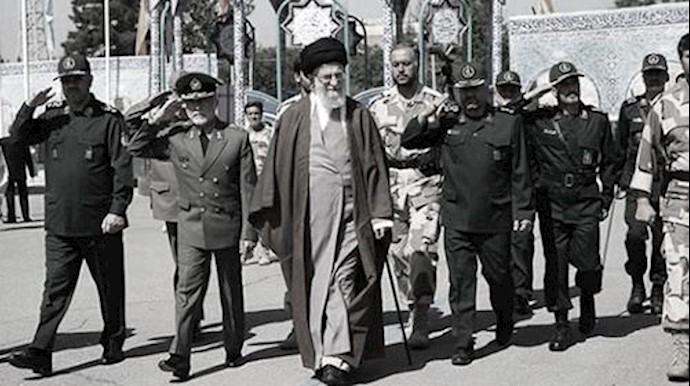
Breitbart, May, 13, 2017 – In a speech to graduating cadets of the Iranian Revolutionary Guards Corps, which is loyal to the ayatollahs rather than the secular government, Supreme Leader Ayatollah Ali Khamenei threatened harsh consequences for protesters who disrupt the presidential election in two weeks.
“Anyone wanting to take any measure against the country’s security in the election will certainly receive a hard reaction and slap in the face,” Khamenei promised.
The New York Times notes that elections have become “delicate moments” in Iran since the 2009 widespread protests sparked by accusations of election chicanery.
“Televised debates this year have been held with new restrictions, in contrast to the live debates in 2009 that helped polarize the country. Campaigning is also controlled. Street rallies are not allowed. Instead, the candidates speak to their followers in stadiums and halls,” writes the NYT.
Ebrahim Raisi, a powerful “hardline” cleric who claims to be descended from Mohammad and may be a candidate to succeed Khamenei as Supreme Leader, was playing up Iran’s economic problems and criticizing “weak executive and economic management” as the country’s major problem. Former Tehran Mayor Mohammed Baqer Qalibaf promised “welfare, peace, and security,” while former Culture Minister Mostafa Aqa-Mirsalim complained that Iran’s human resources and educational system have degraded.
Newsweek finds a “rare” level of criticism for foreign policy in this particular election, noting that supporters of Rouhani have criticized Iran’s military intervention in Syria. This is remarkable because the Supreme Leader and theocracy traditionally set Iran’s foreign policy goals, and criticizing the Syrian intervention is actually illegal because the ostensible purpose of Iranian troops in Syria is to defend the Shiite Shrine of Zeinab in Damascus. Insulting the martyred defenders of the Shrine is an indictable offense under Iranian law.
Despite this dash of election drama, some analysts doubt the election will affect Iranian foreign policy much, advising the Trump administration not to be fooled by any pretense otherwise.
“One should not expect a major shift in Tehran’s policies after the elections. It will be a huge folly and total misguided approach by the West to pin any hope on the results of this election,” said former Italian Foreign Minister Giulio Terzi last week, at an online conference hosted by the opposition National Council of Resistance of Iran.
“Elections in the clerical regime is power sharing between various factions of the brutal regime,” said NCRI Foreign Affairs Chairman Mohammad Mohaddessin at the same conference. “It is also about various factions’ share in plundering the Iranian people’s wealth.”