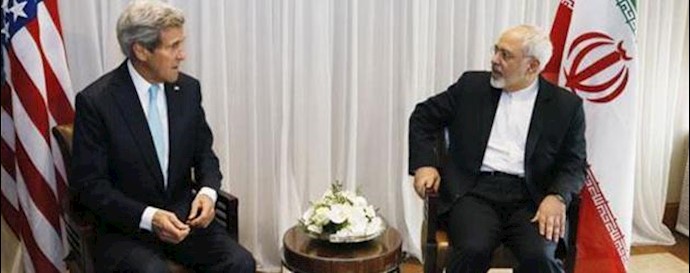
GENEVA (Reuters) Feb 22, 2015 – U.S. Secretary of State John Kerry and his Iranian counterpart Mohammad Javad Zarif try to narrow gaps in another round of nuclear talks in Geneva on Sunday as they press to meet a March 31 deadline for a political framework agreement.
Kerry did not make remarks on his arrival in Geneva, where he was first meeting members of the U.S. delegation before sitting down with Zarif.
Joining the talks for the first time are U.S. Secretary of Energy Ernest Moniz and Iran`s nuclear chief Ali Akbar Salehi, as well as a close aide and the brother of Iranian President Hassan Rouhani, Hossein Fereydoon.
Zarif said this reflected a need “for higher level people with all-embracing command over all issues”, while Fereydoon was involved for better “coordination with the president”.
Kerry said on Saturday the presence of Moniz reflected the highly technical nature of the current talks and in no way meant “that something is about to be decided”.
“There is still a distance to travel,” Kerry said in London where he met British Foreign Secretary Philip Hammond.
The negotiations between Iran and “P5+1” powers – the United States, Britain, France, Germany, Russia and China – have reached a sensitive stage with divisions remaining, mainly over Iranian uranium enrichment and the pace of removing sanctions.
A recent U.N. report said that Iran had refrained from expanding tests of more efficient models of a machine used to refine uranium under a nuclear agreement with the six world powers.
Development of advanced centrifuges is feared to lead to material potentially suitable for manufacture of nuclear bombs.
Kerry said U.S. President Barack Obama was not inclined to extend the talks again. The parties already missed a November 2014 target date.
Obama believed it was “imperative to be able to come to a fundamental political outline and agreement within the time space that we have left,” Kerry said.