Bloomberg Views Eli Lake and Josh Rogin recently reporte
In his interviews with different media outlets, U.S. President Barack Obama has made assertions about the Iranian regime being able to become a successful regional power and help stabilize the Middle East. Also, in his secret missives
The assumption that Tehran can help in the fight to counter the advances of the IS stems from the shortsighted thinking that as a Shiite extremist powerhouse, the Iranian regime is the archenemy of the Sunni extremist Islamic State.
But a quick review of Iran’s actions in recent years proves that Tehran’s foreign policy in the region is not based on ideological tenets, but rather on setting up short-term — and sometimes contradictory — alliances to further its ultimate end: keeping the Middle East in a state of instability in order to remain the main power broker and hegemon of the region.
For instance, in 2001, Iran allegedly helped the U.S. with intelligence in invading Afghanistan and defeating the Taliban, a Sunni extremist government which at the time was a rival to the Iranian regime. But today, Iran is providing training camps to Taliban fighters and is backing it with cash and arms
Another example is Yemen, where Iran’s proxy, the Houthi militants have cast their lot with Iran’s former bitter enemy, ousted President Ali Abdullah Saleh, and have occupied large swathes of the country, triggering a regional conflict and an all-out humanitarian crisis that is spreading across the Arabian Peninsula.
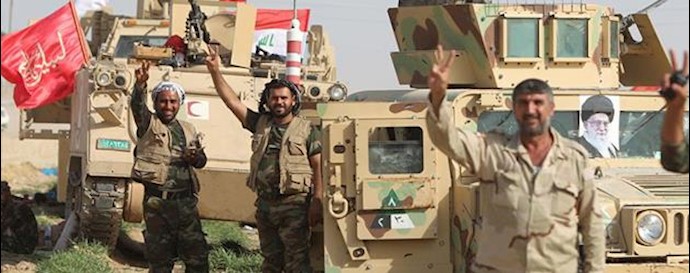
Iran also has regional goals in Iraq and Syria. While in Iraq, the Popular Mobilization Forces — an Iran-backed umbrella of Shiite militias — are ostensibly fighting the Islamic State, in Syria, the embattled regime of Bashar al-Assad, which is backed by a plethora of Iranian proxy militias, is effectively colluding with the Islamic State in order to fend off the advances of opposition forces.
Moreover, Iran has at some point given refuge
To conclude, Iran’s loyalties are tactical and volatile, and relying on its Shiite nature as a basis for enlisting it in the fight against IS can prove to be calamitous. As soon as Tehran reaches the conclusion that IS is no longer a threat for its regional ambitions, it will order its forces to turn their weapons toward its next rival – the U.S. and its allies in the region. And it should not come as a surprise if Iran decides to align itself with the remnants of IS to that end.
Ironically, as Lake and Rogin’s report states, among the groups now sharing headquarters with the U.S. advisors in Iraq, some are designated as terrorist groups
Giving leeway to the Iranian regime’s mischief-making for the sake of fighting IS is a self-defeating strategy that is already on its way to becoming an abject failure. Iran-backed Shiite militias are ransacking Sunni townships and villages
Iran’s goals is to seize Iraq for its own, not to stabilize it against terrorist groups. Therefore, any rational approach to putting back the torn pieces of Iraq would first start by the total eviction of the Iranian regime and its terrorist elements from the country. Not doing so will only help embolden Tehran in its evil deeds and increase the Iranian regime’s influence in Iraq and the Middle East.
To marshal Iraqis against the onslaught of the IS, the marginalized Sunni population needs to be empowered with both the political and the military clout needed to take part in reuniting the country and driving out extremist elements. They have already proven to be capable of doing so during the 2006-2007 surge against al-Qaeda.
Published in American Thinker, written by Amir Bassiri – July 1, 2015.