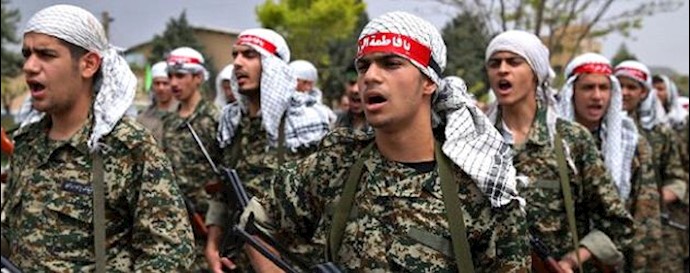
The war in Syria is becoming increasingly an Iranian war rather than a civil war.
Consider this new report by Now Lebanon, entitled “Syria Alawites reportedly clash with regime, Iran troops.” Two facts are striking. First, the Alawite regime of Bashar al-Assad is having enormous trouble recruiting Alawite youths to join the military. It has long been said that the Alawite community is his base and will fight for him, if only out of fear that if the regime falls they will pay the price when Sunnis attack Alawites. But more and more Alawites, it seems, do not wish to risk their lives for Assad. This should not be quite so surprising, because only the Alawite upper classes benefitted financially from the regime (and some became millionaires and even billionaires), while many Alawites remained in poverty.
Moreover, Syrian Alawites apparently do not wish to see their country become a colony of Iran. The Now Lebanon report says that the attempt to dragoon more Alawites into the armed forces was pushed by Iranian troops:
Syrian regime forces backed by Iranian troops have reportedly clashed with residents of two Alawite villages outside Hama following an arrest campaign in the area.
Alaraby Aljadeed reported that residents in the rural Hama villages of Al-Bared and Al-Qahira—which are populated by members of the Alawi sect and the Alawi-offshoot Murshidi sect—engaged in fighting Monday with Syrian and Iranian troops….The unprecedented round of fighting between the regime-supporting towns and the pro-government troops follows an arrest campaign in the area that was reportedly ordered by a local Iranian field commander.
This is also a reminder that an Iranian expeditionary force is in Syria, and that Syrian government forces are actually commanded by Iranians. Now Lebanon explains:
The raids on the two Alawite-populated towns come weeks after Iranian officers reportedly took over operational command of the frontlines in the northwest Hama province south of Idlib, which rebels seized in full in early June. The reported handover of power to Iranian officers follows the visit Revolutionary Guards Quds Force commander Qassem Soleimani paid to the Jourin area south of Idlib in late May, after which he announced that a “surprise” was being prepared in Syria. The Iraqi Kurdish Bas News outlet on June 8 reported that major command changes had been conducted on the Latakia-Hama-Idlib front following Soleimani’s trip. A Hama-based media activist said that the Syrian regime’s chief of operations in the area, General Jamal Younis, had been removed from his post and replaced by an Iranian general known only by his moniker Iffari, who set up his headquarters in Jourin.
While we debate the possible nuclear deal with Iran, let’s not lose sight of Iran’s aggressive conduct throughout the region. If the nuclear deal does get signed and as planned gives Iran access to $150 billion, we can expect even more of an Iranian (and Hezbollah) role in Syria. Not only is there Sunni and Kurdish resistance but now some Alawite resistance. The usual way Assad and Iran deal with such resistance is murder. If the Iran deal comes to pass, let us hope that far stronger American action is planned to prevent even more killings in Syria and to see if the Alawite population can be turned against the regime.
Republican presidential candidate Lindsey Graham said Wednesday he would be prepared as commander-in-chief to do “whatever” would stop Iran from acquiring nuclear weapons.
While the South Carolina senator said he was “not going to invade Iran using ground forces” or “do anything else as long as there’s hope for negotiations,” he did suggest he hasn’t ruled out putting American boots on Iranian ground. “If I see a nuclear breakout, then we’re going to stop it,” he told an audience at the Atlantic Council in Washington on Wednesday, one day after six nations, including the United States, attempting to negotiate a nuclear deal with Iran had to extend their self-imposed negotiating deadline. “I would use whatever force is consistent with stopping the breakout.”
Warning of a “a nuclear arms race in the Mideast,” Graham said the threat of an “overwhelming” response against nuclear facilities that would also target the Iranian Navy and Air Force was key to extracting a deal from the Islamic Republic.
His message to Iran if he were president: “I don’t want a war. But if that’s what you want, you’re going to lose it.”
Graham, though, has said he favors the use of ground troops in a variety of situations on the advice of military commanders. During his appearance, Graham also outlined his vision for 10,000 troops in Iraq to combat the terror group Islamic State there, a coalition invasion of Syria to remove president Bashar al-Assad from power and combat the Islamic State, and the maintenance of a near-10,000-strong force in Afghanistan—all with long-term assignments if necessary.
“I’m offering a generation commitment to young people, women, and the disenfranchised” in those countries, he said.
Despite his proposals, Graham said he would take back one of the ground invasions he helped launch.
“If I’d known then what I know now, I wouldn’t have invaded Iraq,” he said.
A recent survey of more than 2,000 Americans by the Chicago Council on Global Affairs found as many as 81 percent of Republicans would support “the use of US troops to stop Iran from obtaining nuclear weapons.” He suggested some of his fellow Republican candidates didn’t understand the stakes and dynamic in the region.
“If you’re too war-weary, don’t vote for me,” Graham said.
Politico, 8 July 2015