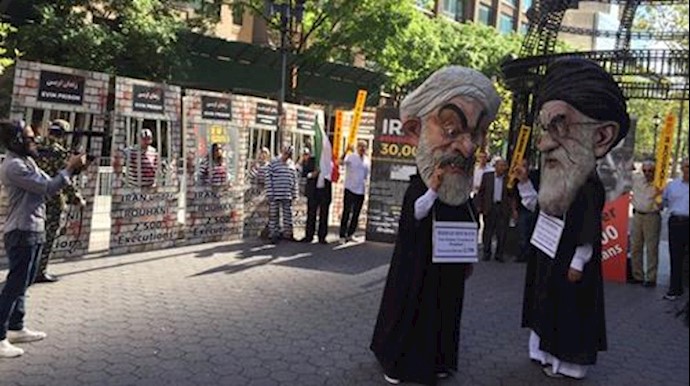
Under the Global Pressure and the call by the International Movement for Justice for 1988 Massacre Victims, some 150 members of the Iranian regime Majles deputies signed a bill to significantly reduce the number of people the Islamic Republic executes on drug trafficking charges, while the measure is already facing stiff opposition.
Iran continues to be among the countries that execute the highest number of their own citizens. Tehran put at least 977 people to death in 2015, placing it alongside China and Pakistan in the top tier of countries practicing capital punishment, according to Amnesty International.
UN chief Ban Ki-moon admonished Iran’s execution record in a 19-page report released by the organization on October 3. He said he was “deeply disturbed” by the “alarming rate” of executions in Iran, despite President Hassan Rouhani’s previous pledge to address the issue.
Small-time drug dealers
Some Iranian officials are nevertheless trying to change their country’s reputation. Around 150 majles deputies have signed a parliamentary bill that would abolish the death penalty for drug smugglers, commuting their execution orders to prison terms.
The reform could significantly reduce capital punishment figures in a country where a majority of death row inmates have been convicted of drug-related crimes. In 2013, over 70 percent of all executions in Iran were carried out for drug dealing.
According to reformist MPs behind the parliamentary bill, the mass number of executions has failed to reduce drug trafficking in the country. “The vast majority of those who were executed or are on death row are small-time dealers, first-time convicts, and their death destroys their families,” MP Jalil Rahimi Jahanabadi told the ISNA news agency on October 4.
He said the bill specified that the death penalty should only be applied to specific cases, such as for repeat offenders and drug barons.
Justice Minister Mostafa Pourmohammadi, a conservative politician, has expressed public opposition to the reform. “There are cases where a person is guilty of corruption, and his existence will only produce more corruption,” he told the state-run IRNA news agency.
The reform will also face a legislative process riddled with hurdles. If the bill is approved by Parliament, it could still be blocked by the Guardian Council, a body controlled by Supreme Leader Supreme Leader Ali Khamenei. The country’s leader has the last word on any judicial matter in Iran, and has so far remained silent on the issue.
Extracted from a France 24 report: 2016-10-06