BEIRUT—Hezbollah along with members of Iran’s Revolutionary Guard unit and thousands of Iran-funded and trained Shiite fighters from Afghanistan, Iraq, Pakistan and elsewhere are leading the current ground assault in the northern Syrian city of Aleppo, pressing an offensive just before a cease-fire is supposed to take hold to allow for the delivery of humanitarian aid and the start of peace negotiations.
Escalation of violence, especially in the north, cast doubt on the future of the whole peace process.
President Barack Obama, in a news conference Tuesday, gave no indication the U.S. has a Plan B should the cease-fire fail, beyond continuing to try to work with Russian President Putin on a political resolution to the conflict.
Iran’s rivals—Saudi Arabia and Turkey—have signaled they might get involved militarily to prevent Iran and Russia from crushing opposition rebels in and around Aleppo.
Phillip Smyth, a researcher with the Washington Institute for Near East Policy and expert on Shiite groups in Syria, said Iran has worked for decades to assemble and synthesize this network of proxies starting in the 1980s.
The centerpiece of this force was initially Hezbollah. After the 2003 U.S.-led invasion of Iraq, Iran began creating new proxy Shiite militias there to fight the Americans. In Syria, Hezbollah and some members of the Iraqi Shiite militias were brought together with newer homegrown Syrian militias and a contingent of Afghan Shiites.
Since the start of the uprising against the regime in 2011, Saudi Arabia has backed a spectrum of armed groups and opposition figures and continues to insist there is no lasting solution in the country, including the defeat of extremists like Islamic State, without the removal of Bashar al-Assad.
Mr. Smyth said the core of the Iran-led forces in Syria include several thousand Iranian fighters, up to 8,000 from Hezbollah, an estimated 6,000 Iraqis and about 3,500 Afghans. The numbers were corroborated by the senior official in the Iran-Russia-Syria alliance.
Tehran has already spent billions of dollars and dispatched thousands of its proxy militiamen to the country to prop up its ally, Assad.
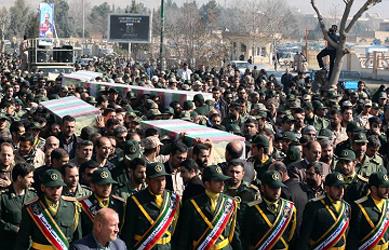
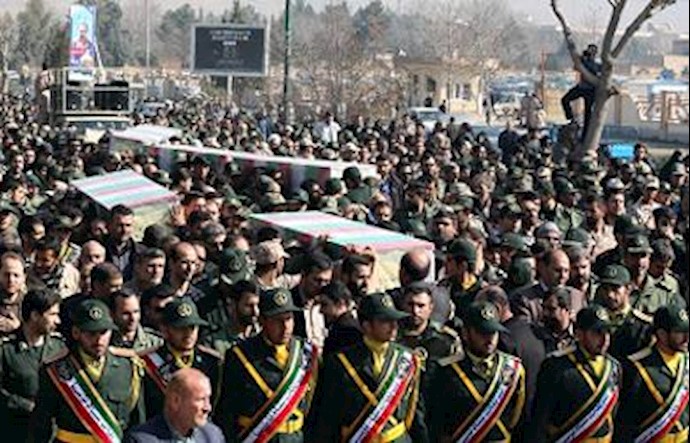
Members of the Iranian Guard in Tehran this month carried the coffins of fighters who were reportedly killed in the northern province of Aleppo.
Today, funerals for Shiite fighters killed in Syria are held openly in Baghdad, Beirut and Tehran.
Extracted from a Wall Street Journal article, Feb. 16, 2016