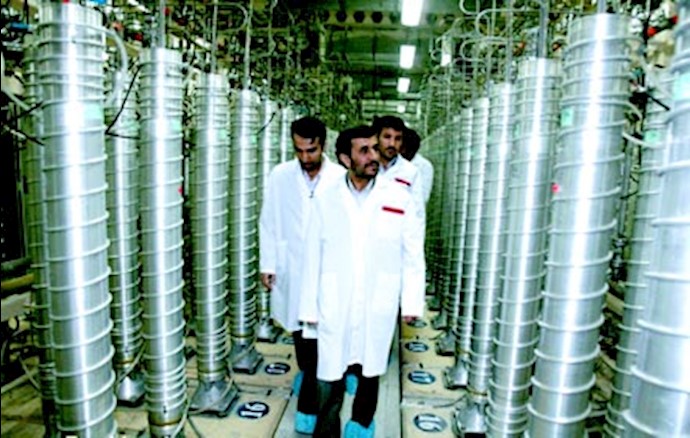
AFP, Tehran, April 11, 2010 – Iran will within months begin mass production of second generation centrifuges capable of enriching uranium three times faster than existing machines, atomic chief Ali Akbar Salehi said.
Salehi, who spearheads Iran’s nuclear programme, said Tehran also now possessed the technical know-how to manufacture the fuel pellets required to power atomic reactors.
’The mass production of second generation centrifuges will begin in the coming months,’ Salehi said in an interview on state television broadcast late Saturday.
Iran currently enriches uranium at its plant in the central city of Natanz using first generation IR-1 centrifuges.
On Friday the Islamic republic unveiled a third generation centrifuge which it claims can enrich uranium six times faster than the IR-1 system.
Natanz has a capacity of 60,000 centrifuges and Iran has been steadily enriching uranium there for years in defiance of three sets of UN sanctions and threat of a fourth.
Uranium enrichment lies at the heart of the controversy surrounding Iran’s nuclear programme as the material can be used either to power a nuclear reactor or to make an atom bomb.
The enrichment method used by Iran is a classic type in which uranium hexafluoride (UF6) gas is whizzed around in a centrifuge at supersonic speeds.
Salehi said Iranian scientists will inject UF6 gas in the third generation centrifuge in few months, adding however, ’maybe it needs a year for us to witness a chain of them.’
’Once our appraisal of third generation (centrifuge) is complete and we reach its mass production, the manufacture of the second generation machine will be stopped.’
The UN nuclear watchdog in its February report said Iran has installed 8,610 first generation IR-1 centrifuges at Natanz.
Western countries led by Washington suspect that Iran’s nuclear programme masks a weapons drive. Iran denies these accusations, saying it is enriching uranium only to produce electricity for a growing population.
Salehi meanwhile dismissed Western claims that Iran lacked the know-how to make the fuel pellets required to power a reactor, such as its research facility in Tehran.
’They said: you can’t make pellets. But now I can say with certainty that we have the technical knowledge to make fuel pellets,’ Salehi said.
World powers Russia and France are ready to supply fuel for the Tehran reactor if Iran ships its low-enriched uranium abroad, but the UN-drafted deal has hit a deadlock over differences between the two sides.
Iran has defiantly started producing the fuel itself, but France claims that Tehran lacks the technology to convert the material into the fuel pellets needed for the facility.
Salehi said Iran was close to mastering the fuel pellet technology and on Friday the Islamic republic unveiled what it claimed was a ’virtual’ model of the pellets using copper.
’We are going slowly. In the next stage instead of copper as virtual fuel we will use a material close to uranium and in the following stage we will use uranium itself,’ he said, adding that the pellet manufacturing facility was also nearly ready.