March, 9, 2016 – Three top US military commanders told the Senate that the struggle against terrorists in the Middle East and Africa is going well, while explaining their strategic priorities.
Facing the Senate Armed Services Committee on Tuesday were chiefs of the US Central Command (CENTCOM) General Lloyd Austin, Africa Command (AFRICOM) General David Rodriguez, and the Special Operations Command (SOCOM), General Joseph Votel.
Rodriguez is expected to retire later this year, while Votel has been tapped by President Barack Obama to succeed Austin as the next head of CENTCOM.
Often the questions posed by the Senators were more interesting than the answers, suggesting a greater obsession with Iran than Islamic State (IS, formerly ISIS/ISIL).
Iran and Saudi Arabia conflict
One of the root causes behind the instability in the Middle East is the “ethno-sectarian competition that exists between groups and chiefly among Shia and Sunni and Arab and Persian populations,” General Austin told the lawmakers.
Sectarian tensions have seriously weakened several nation-states in the region, and IS has sought to exploit them, CENTCOM’s chief said. In response to a question from Senator Joe Manchin (D-West Virginia), however, Austin said that Iran is the greatest threat to “mid- to long-term stability in the region.”
“Iran maintains hegemonic ambitions and will continue to pose a threat to the region,” Austin argued. “Our relationship with Iran remains a challenging one. We will continue to pay close attention to their actions, while supporting our regional partners and helping them to improve their capacity to counter Iran and mitigate the effects of Iran’s malign activity in the region.”
The situation in Bahrain was described as “a persistent threat from Iran via malign proxy activity within its borders.”
As for Yemen, the general described Saudis efforts to “counter the Houthis and associated forces with the goal to return the legitimate displaced Hadi government to power.”
“[Saudi Arabia] desires a stable Yemen with a pro-Saudi government that effectively protects its border, prevents an Iranian proxy from gaining undue influence over strategic terrain that includes the Bab al Mandeb, and protects against safe havens for Al Qaeda in the Arabian Peninsula (AQAP) and other [terrorist groups],” Austin told the lawmakers.
“We are working with the Saudi-led coalition to help mitigate civilian casualties and to ensure that humanitarian assistance flows into Yemen,” he added, while blaming the civilian casualties on the Houthis, who were “positioning armaments or military equipment in areas where civilians are known to be present.”
In Syria, more of the same
On several occasions, General Austin spoke of “indigenous forces” on the ground that could take the fight to IS with US support. In his opening remarks, he requested funds to restart a program to train and equip these forces, calling it “critical to future success.”
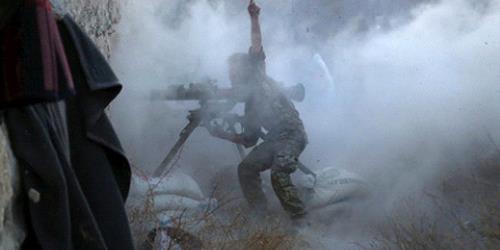
That program was stopped last year after producing fewer than 200 fighters.
Rhode Island Democrat Jack Reed asked if CENTCOM really wanted to revive the failed train-and-equip program.
“We are, Senator,” Austin replied. “I asked permission to restart the effort, using a different approach.”
Later in the hearing, Senator Graham asked General Votel what percentage of the Syrian Democratic Forces (SDF) were Kurds. Votel admitted that Syrian Kurds make up “about 80 percent” of the SDF.