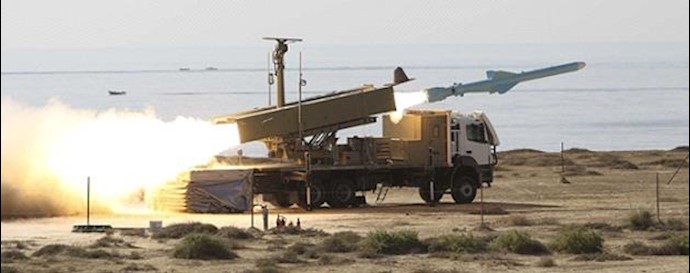
Iran is preparing to hold massive “ballistic missiles war games,” The Washington Times reported on Friday, August 21st citing a top commander in the Iranian Islamic Revolution Guards Corps. This follows an announcement that Tehran plans to begin phasing in a new generation of such missiles.
“The IRGC Aerospace Force will hold a large-scale ballistic missiles war-games soon,” Brigadier Gen. Hajizadeh said, addressing a ceremony in the northern Iranian city of Qaemshahr, according to a report by the Islamic republic’s state controlled Fars News Service.
Fars said Gen. Hajizadeh reiterated that the IRGC Aerospace Force has successfully conducted missile tests over the past two years. The news service also said that in March the general had announced Iranian plans to replace its Fateh, Qiyam and Qadr missile series with a new generation of missiles.
At the time, he reportedly said the short-range Fateh 110 missiles, as well as the mid-range Qiyam and Qadr — the latter of which are a first generation of air-launched precision guided weapons — would be replaced with a newer long-range ground-to-ground Soumar cruise missile system built by Iranian technicians despite U.N. sanctions aimed at blocking such construction.
At a recent unveiling ceremony, Iranian Defense Minister Brigadier Gen. Hossein Dehqan told reporters that “the long-range ground-to-ground Soumar cruise missile system has been designed and built by experts of the defense ministry’s aerospace industries organization,” according to Fars.
The issue of Iran’s ballistic missiles is a heated one in Washington, particularly within the context of outrage expressed recently by several U.S. lawmakers that the major nuclear accord reached this summer allows for an eventual lifting of a long-standing U.N. embargo on ballistic missiles sales to Tehran.
The most aggressive critics of the nuclear deal say it will pave the way for Iran to clandestinely develop nuclear weapons and to potentially target archenemy Israel with ballistic missiles.
Under the terms of the accord reached in July, Iran agreed to a continuation of the U.N.’s arms embargo on the country for up to five more years and ballistic missile restrictions for up to eight years.
The notion that Iran is advancing its ballistic missiles program despite the U.N. restrictions is likely to draw increased scrutiny in Washington as Congress approaches its September deadline for voting on whether to try and block the Obama administration from implementing the nuclear accord.