
In a message of condolence for Saturday’s funeral of cleric Vaez-Tabasi in Mashhad, Khamenei, Iran’s supreme leader, said the departed cleric, who died the previous day aged 80, had been “a sympathetic brother…[and] comrade of difficult days”.
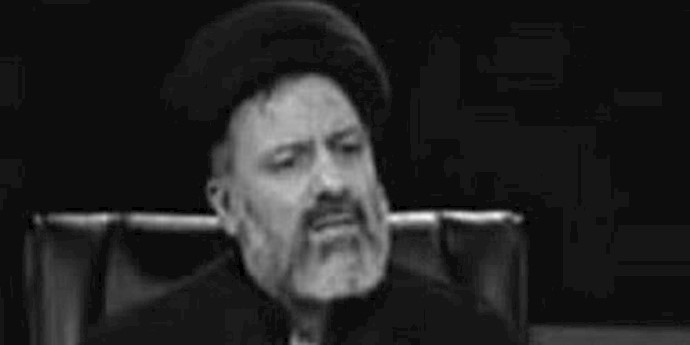
But Khamenei lost no time in appointing Ebrahim Raeisi, the 55-year-old national prosecutor-general, to follow Vaez-Tabasi as chairman of Astan Quds Razavi, the foundation that manages the Imam Reza shrine in Mashhad.
Raeisi is a close ally of Khamenei, and his appointment will strengthen links between the leader’s office and the shrine, whose annual turnover – based on endowments, property and companies – is many billions of dollars. The leader has chosen another ally, Ahmad Alamolhoda, as his representative for Khorasan province, a second post left vacant by Vaez-Tabasi’s passing.
Vaez-Tabasi was close to former president Akbar Hashemi Rafsanjani, an ally of Hassan Rouhani. Back in the 2005 election, the shrine backed Rafsanjani in his unsuccessful presidential bid, as did three of the city’s five parliamentary deputies.
Raeisi, who holds the clerical rank of hojjatoleslam, is a different character. At last year’s 36th anniversary of the taking of the embassy hostages, which featured denunciations of the United States as the “Great Satan”, Raeisi announced that the intelligence and security forces had “identified and cracked down on a network of penetration in media and cyberspace, and detained spies and writers hired by Americans”.
Two years ago, Raeisi accused the west of promoting homosexuality around the world in the name of human rights, and he has also reportedly defended the amputation of the hands of thieves.
Since 2012 he has been prosecutor of the Special Court of the Clergy (dadgahe vijeh-ye rohaniyat), a body answerable to the leader that is outside the usual judicial process and has indicted several reform-minded clerics.
At the time of the 1988 executions of 30,000 political prisoners ordered by then leader Khomenei, Raeisi was deputy prosecutor in Tehran, a role he had held since 1984-5. On his website Raeisi says after Khomeini asked him to investigate certain provincial cases in the Iranian year 1367 (1988-89), he then handed him and Jaffar Nayyeri “important cases”.
Nayyeri is described in Tortured Confessions, the 1999 book by leading historian Ervand Abrahamian, as a special assistant to the Tehran special commission, set up alongside others, wrote Abrahamian, “with instructions to execute Mojaheds [members of the opposition Mojahedin-e Khalq]…it was dubbed ‘the commission of death’. Similar commissions were set up in the provinces.”
As head of the shrine, Raeisi could play a huge role in the future succession to Khamenei, 76, as leader, especially as he is also a member for south Khorasan province of the Experts Assembly, the body that chooses the leader should a need arise.
The possibility of a succession to Khamenei in the next eight-year term of the Assembly added bite to last month’s election of the body on a day when Iranians also voted for a new parliament. The Experts Assembly poll saw a shift towards a “List of Hope” – drawn up by Rafanjani, Rouhani and former president Mohammad Khatami – that found success in Tehran, encouraging tactical voting to successfully unseat Mohammad Yazdi, the assembly chairman, and the colorful Mohammad Taqi Mesbah-Yazdi.
And while Khamenei is an arbiter within Iranian politics, he is also a factional player and most powerful decision-maker, with beyt-e rahbari (leader’s office) expanding its scope since he took office in 1989.
Source: The Guardian, 9 March 2016