
Secretary of State John Kerry convinced Gulf allies in Qatar this week that the Middle East will be safer with an Iran nuclear deal in place, which was struck in Vienna on July 14 after marathon talks restricting Iran’s nuclear programme in return for much sought after sanction relief.
Contrary to the optimism of the P5+1, which appears to believe that in the wake of a nuclear accord a framework of regional cooperation can be formed with Tehran, to find resolution for the conflicts raging in the region, many Arab countries have been wary of Iran’s intentions given its track record of hostile interference in their internal affairs over the past three decades. The strong remarks made by the Iranian Supreme Leader, Ali Khamenei, following the Vienna deal, that Tehran remains resolute in supporting its surrogates and foreign allies in the Middle East, crushes the extraordinary delusion of some who believe that regional cooperation with Iran is possible.
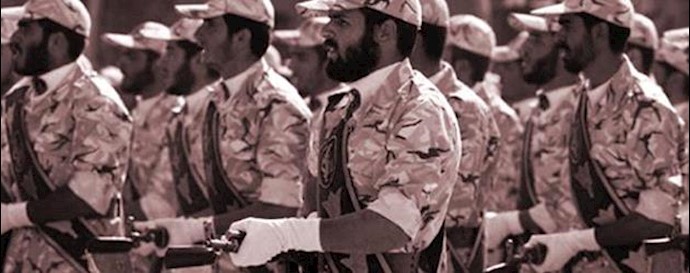
The Iranian regime will unquestionably waste no time in boosting the extraterritorial activities of the Islamic Revolutionary Guards Corps (IRGC) once it gains access to the $150 billion in frozen assets on “Implementation Day” as early as 2016. The recent terrorist attack in Bahrain, in which explosives were used that bore the hallmark of Tehran, and reports from Yemen that Iranian fighters have been caught among Houthi militias, should be clear indicators that Tehran is not interested in settling for regional peace and continues to push forward its divisive agenda. The mullahs’ expansionist ambitions virtually requires the region to capitulate to all of its hegemonic demands.
Irrespective of Kerry’s repeated assurances to Gulf nations that the nuclear deal with Iran would make the Middle East safer, the fact remains that the Vienna accord draws a very bleak picture vis-a-vis regional security. Under the terms of the agreement, the 2010 United Nations Security Council resolution, that imposes arms and ballistic-missile embargoes on Iran, will automatically be lifted in five and eight years respectively instead of making it contingent upon Tehran’s compliance with halting destabilisation of the region through its support for terrorist proxies. This surrender in the eleventh hour by the Obama administration during the Vienna talks will surely not contribute to a feeling of security among Gulf nations and spark a conventional arms race in the Middle East, putting relations on high alert in an already volatile region with all its consequences. The Saudis have already purchased 600 PAC3 missiles from the Americans as part of a $5.4 billion deal, just weeks after the nuclear deal between the international community and Iran was concluded.
Since the founding of the Islamic Republic in 1979, the Khomeini made it the regime’s core objective to export his Shi’ite brand of Islamic fundamentalism with the aim of instigating a revolution that would subsequently result in forming a global Islamic state. Khomeini’s aspiration of exporting his revolution has been the essence of the regime’s foreign policy, as can be observed from Iran’s destabilising activities today in Iraq, Syria, Lebanon, Yemen and Bahrain among other countries. Given these realities, it is therefore astonishing how the Obama administration could have agreed with the lifting of U.N. arms embargoes without getting substantial in return from the Iranians.
Last month Kerry said in an interview with Al Arabiya that Gulf States can organise themselves successfully to push back against proxy activities of Iranian-backed militias, which is needless to say a great notion. Yet by not making hard demands during the nuclear negotiations in order to prevent Tehran from sponsoring terrorism, Washington has effectively emboldened Iran’s regional position against its traditional allies. This will have far reaching consequences for global peace and security in years to come.
The Hill, 6 August 2015
Zahed is the founding director of Middle East Forum for Development, a non-governmental organisation in London.