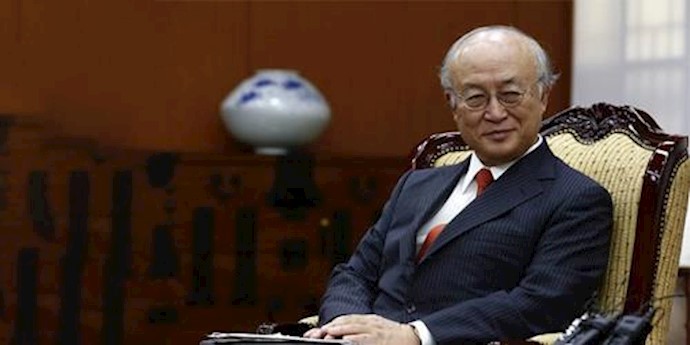
Prodded by Western officials, Tehran steps up limited cooperation with IAEA, diplomats say
BRUSSELS—Iran has responded to Western pressure by stepping up at the last minute what had been very limited cooperation with a probe by United Nations atomic agency inspectors into its past nuclear work, diplomats familiar with the investigation say.
It is unclear if Iran’s response will be enough to answer some long-standing questions from the International Atomic Energy Agency into whether Iran had pursued nuclear weapons.
The probe, which continued with discussions this week between senior IAEA and Iranian officials, was supposed to be completed Thursday.
In the past two weeks, after Iran had largely brushed off serious questions about its past nuclear activities, the IAEA and some Western governments directly warned Tehran that it must increase cooperation if it wanted IAEA board members to conclude it had sufficiently addressed their concerns.
The board must decide in mid-December, based on a report by Director General Yukiya Amano, whether Tehran has done enough for the nuclear agreement Iran signed in July with six world powers to proceed.
“There have been several meetings on an expert level between Iran and the IAEA including one that is currently taking place,” said a diplomat Tuesday. “It is premature to pass judgment on substance but the process is taking place as planned.”
Many Western diplomats are pessimistic, however. Until last week, they say, Iran had tightly restricted access to key people and places and offered few new explanations of its past nuclear work. It continued to stand largely behind its customary answer that much of the evidence amassed by the agency that Tehran once sought to develop nuclear weapons technology was forged.
“It was the degree of cooperation we expected,” one senior Western diplomat said, “which was minimalist.”
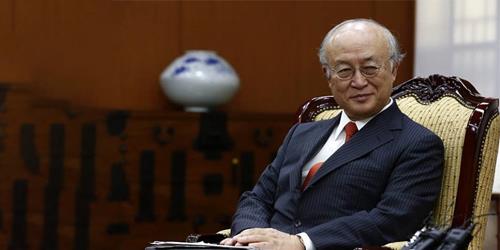
Yukiya Amano, director general of the International Atomic Energy Agency
July’s accord saw Iran agree to significantly scale back its nuclear program in return for sanctions relief. But it left vague the kind of access, information and transparency Iran needed to provide on the nuclear-work probe.
On Wednesday, Iran’s powerful Guardian Council of clerics approved the nuclear pact, leaving final approval to Supreme Leader Ayatollah Ali Khamenei. The nuclear agreement is expected to be formally “adopted” next week by Iran and the P5+1, which comprises the U.K., U.S., France, Russia, China and Germany. That move will then trigger months of work by Iran to dismantle key parts of its nuclear infrastructure. Sanctions won’t be lifted until that is done, probably early 2016.
Iran has always denied allegations it worked on a weapons program that Western officials say Tehran probably largely shut down in 2003. In November 2011, the IAEA published a report detailing 12 sets of questions it had about Iran’s past work, which ranges from tests of explosives and detonators to computer modeling studies that could be used to develop nuclear weapons.
The IAEA has been clear so far that Tehran has complied with the formal steps in its probe. Tehran submitted on time written explanations about past nuclear work, which Mr. Amano described as a “substantive volume” of information. The agency sent a series of follow-up questions to Iran in early September, which led to discussions in Tehran that the two sides agreed to finish by Oct. 15.
Iran also provided seven samples from its sprawling Parchin military site south of Tehran, where it is suspected of carrying out some of its nuclear-weapons-related tests. It also gave access to Mr. Amano and a second top agency official to Parchin on Sept. 20.
However diplomats with knowledge of the discussions say that beyond the formalities, Iran gave little more until last week.
Before July’s deal was signed, some Western officials said they hoped the agency would gain access to key sites, documents and people who had worked on Iran’s nuclear program. That includes Mohsen Fakhrizadeh-Mahabadi, an Iranian military officer the U.S., Israel and the IAEA suspect oversaw weaponization work.
Iran’s transparency has fallen far short of that, diplomats say. The documents provided in August were described by diplomats as containing little new insight. Mr. Amano said in August that speaking to Mr. Fakhrizadeh wasn’t necessary.
Since Sept. 15, Iran and the IAEA have held several sets of senior expert-level meetings. Two of them—in mid-September and the end of month—were described as unhelpful, with Iranian officials largely stonewalling on questions and claiming that IAEA evidence was forged, one person said.
Far from sitting down with senior Iranian nuclear scientists, the discussions were held mainly with diplomats who had never worked on the nuclear program, two people said.
Beyond Mr. Amano’s Parchin visit, access to other locations the agency hoped to visit was also very restricted, the diplomats said.
Following those meetings, the agency and some Western capitals sent messages to Tehran saying it must engage more seriously, according to several people. The gist of those messages, said the senior Western diplomat, was that Iran “should not take us for granted.”
In response, Iran has provided “more information and more access,” one person said. While no further details were provided, some Iranian nuclear scientists attended last week’s discussions, diplomats said.