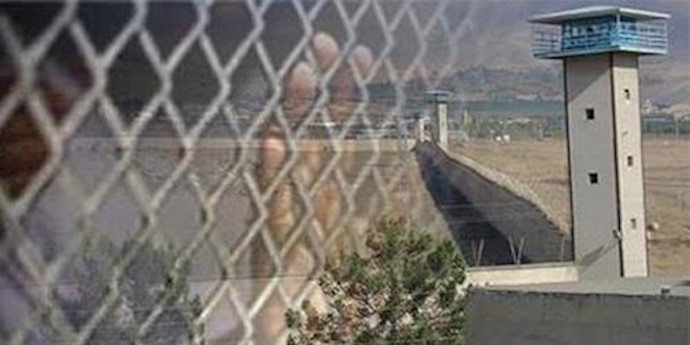
Following the recent crackdown in the notorious Gohardasht Prison, located in the city of Karaj, northwestern Tehran which resulted in injury of a number political prisoners at the hands of prison guards and common criminals who were instigated by the guards to harass and attack political prisoners, the prison authorities denied medical treatments for the injured prisoners
In order to step up pressure on prisoners who were injured in the recent unrest, these prisoners have been denied proper access to medical care. Instead they have been transferred to Hall 33 of Ward 10 where conditions are at sub-human level.
There is no light in the cells, and the prisoners are denied basic items for personal or collective hygiene. The ward is also infested with virus-carrying bugs, cockroaches, lice and fleas.
A number of prisoners have gone on a hunger strike to protest their inhumane conditions.
This is not the first time that the Iranian prison authorities are using the same tactic to put pressure on the prisoners. Last year a number of attacks and rail were conducted by the prison warden in the notorious Evin prison, in Tehran and in Zahedan Prisons.
On August of last year, Evin Prison guards attacked wards seven and eight and inspected prisoners’ belongings. These wards are allocated to ordinary prisoners but regime’s henchmen have transferred a number of political prisoners to these wards to increase pressure on them. During these raids prisoners are always harassed and humiliated and some their belongings are always confiscated or stolen by the henchmen or otherwise destroyed. It was six weeks ago that Evin prison guards raided these same wards.
Similarly, on the same month, the political prisoners of Ward 1 of Zahedan’s central prison were attacked by prison guards. The raid followed a hunger strike by prisoners of this ward to protest the barbaric behavior of the henchmen and prison’s inhuman conditions, including the poor quantity and quality of the food. This raid resulted in a bloody clash between prisoners and prison guards and two prisoners were transferred to the hospital because of the gravity of their injuries.
Also in December of last year, pressures imposed by henchmen and intelligence elements of Ward 7 in the notorious Evin Prison in the capital city of Tehran on the political prisoners and their visiting families led to a protest by the political prisoner and their families.
In response to this protest, the security guards, along with other henchmen, battered the prisoners and prohibited further visits. The henchmen overtly told the political prisoners that they wish to treat them the way political prisoners were treated in the 1980s.
It should be noted here that during 1980s, more than 120,000 political prisoners in Iran were executed, many of them younger than 18. In the summer of 1988 alone, more than 30,000 political prisoners were hanged or set in front of the firing squads just for not repenting and for holding their legions to freedom. The 1988 massacre of political prisoners has well been documented and a book with the names, information and photograph of more than 20,000 of those killed has been published.
Iran regime is marked as the one of the worst human rights violators according to human rights organizations. Recently the UN Rapporteur for human rights, Dr. Ahmad Shaheed was re-assigned to investigate the human rights violations in Iran. The mullahs’ regime has yet to allow Dr. Shaheed to visit Iran.